
USA Casinos for UK Players: Licensing and Risks
 Available in GB

An overseas base or foreign licence does not replace the UK licence required to offer gambling to customers in Great Britain.
Table of Contents
- The legal line between an overseas casino and a UK-licensed one
- Access is not the same as acceptance
- What the American label does—and does not—tell UK players
- The commercial ties behind a casino brand
- Deposits, checks and the trust question
- Choosing carefully when the safeguards differ
- Bonuses, free spins and the price hidden in the terms
- Withdrawal speed depends on the route—and the operator
- What a review can establish—and what it cannot
- Real-money play and UK tax treatment
- Safety
The legal line between an overseas casino and a UK-licensed one
The phrase “USA casinos for UK players” can sound like a question about geography: a casino based in one country, a customer in another. In British gambling law, the decisive issue is not simply where a company has its offices or which licence it holds. It is whether the operator is offering gambling facilities to customers in Great Britain and, if so, whether it holds the licence required to do that.
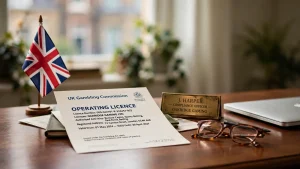
The Gambling Act 2005 governs gambling in England, Scotland and Wales. Under that framework, an online operator providing gambling facilities to customers in those nations must hold a licence from the UK Gambling Commission. The rule applies to overseas businesses as well as domestic ones. A company does not escape the requirement merely by locating its headquarters abroad, hosting its website elsewhere or holding a licence from another jurisdiction.
That distinction matters when a site describes itself as an American, international or overseas casino. Such labels may describe a business’s intended market, its branding or its physical base; they do not establish that it is authorised to serve British customers. Nor does a licence issued abroad take the place of a UK Gambling Commission licence for an operator offering gambling to people in Great Britain. The legal line is drawn around the service being provided, not just the address printed in a corporate record.
If you’re in the UK and considering USA casinos in 2026, payout speed is one practical detail to check when reviewing your options. The entries below note the payout timeframe provided for each operator.
1. NightLuck
Payout speed: 1-3 business days NightLuck lists a payout speed of 1–3 business days.
2. x3bet
Payout speed: 1-3 business days x3bet lists a payout speed of 1–3 business days.
3. Chanze
Payout speed: 1-3 business days Chanze lists a payout speed of 1–3 business days.
4. Amunbet
Payout speed: 1-3 business days Amunbet lists a payout speed of 1–3 business days.
5. BeOnBet
Payout speed: 1-3 business days BeOnBet lists a payout speed of 1–3 business days.
6. SlotoSport
Payout speed: 1-3 business days SlotoSport lists a payout speed of 1–3 business days.
7. SpinFormula
Payout speed: 1-3 business days SpinFormula lists a payout speed of 1–3 business days.
8. Zombillion
Payout speed: 1-3 business days Zombillion lists a payout speed of 1–3 business days.
9. Britsino
Payout speed: 1-3 business days Britsino lists a payout speed of 1–3 business days.
10. NightWin
Payout speed: 1-3 business days NightWin lists a payout speed of 1–3 business days.
A UK-licensed casino operates within the domestic regulatory system. An overseas casino without a UKGC licence does not. The two may both present games through a website, but that surface resemblance does not make their legal positions equivalent. For an operator, offering gambling facilities to customers in England, Scotland or Wales without the required licence is illegal. Advertising those services in the UK without the relevant licence is also unlawful. The obligation rests on the business that supplies or promotes the gambling, rather than on the customer who encounters it.
This is the point at which the word “illegal” needs careful handling. It describes the operator’s conduct in the British market; it does not automatically describe the act of an individual placing a bet. British law does not make it a criminal offence for a person to gamble with an overseas operator simply because that operator lacks a UKGC licence. There is no UK law prohibiting an individual from placing bets with a casino licensed outside the country.
The distinction is not a loophole that turns an overseas site into a UK-licensed one. It is a separation of legal responsibilities. The operator may be acting unlawfully by offering gambling facilities to British customers without authorisation, while the player does not incur criminal liability merely by taking part. One side’s legal position does not transfer neatly to the other.
Anjouan casino licence in the UK: what it means
That separation can be easy to miss because a website puts both parties in the same transaction. A person chooses a game, the operator supplies it, and the account sits within the operator’s system. But the law asks different questions about each side. For the company, the question is whether it has the required permission to serve the market. For the customer, the narrow question is whether placing a bet with a foreign casino is itself prohibited. The answers are not the same.
Searches for American online casinos available to people in the UK often compress these issues into one phrase. “Available” may suggest that a site can be reached or that it accepts a registration; neither fact, by itself, establishes that the operator is authorised to provide gambling in Great Britain. That is a question of regulatory status, not a customer’s criminal liability. The label “USA” does not settle it.
There is also a geographic precision worth keeping. The Gambling Act 2005 applies to England, Scotland and Wales, not Northern Ireland. Accordingly, the licensing rule described here concerns the British market covered by that Act; it should not be casually extended to Northern Ireland as though the same statute governed all four nations. Broad phrases such as “UK law” can conceal boundaries that matter.
In ordinary speech, an overseas casino may be called foreign, international or non-UK. In legal terms, those descriptions are not the test. A casino licensed elsewhere may still need a UK Gambling Commission licence if it offers gambling facilities to customers in Great Britain. Conversely, the fact that an operator’s service is unlawful to provide without that licence does not mean a British player commits an offence by using it.
While it is not a criminal offence for an individual to gamble with an overseas operator without a UKGC licence, the operator itself acts unlawfully by offering such facilities to British customers.
So the legal line is less dramatic than the language of “legal” and “illegal” often implies, but more exacting. The operator’s permission to serve the market and the player’s liability for placing a bet are separate matters. An overseas licence answers only the question of that operator’s status in the jurisdiction that issued it; it does not confer UKGC authorisation. Two legal positions. One transaction.
Access is not the same as acceptance
A casino website loading on a British connection is a small fact about access, not proof of its standing in the UK. The distinction matters because a page can be visible, and even appear to offer registration, while the operator remains outside the framework that governs gambling businesses serving Great Britain. A working website is not a regulatory credential.
In the UK market, a foreign casino is an online gambling operator that takes British customers without a UK Gambling Commission licence. Such casinos may hold an offshore licence, but that does not bring them under UKGC oversight. The label “licensed” can therefore describe a real authorisation while leaving out the question that matters here: which authority issued it, and which rules does that authority enforce? The site may be operating under another jurisdiction’s requirements; it is not regulated by the UKGC.
Access restrictions can add to the confusion. Some casinos licensed outside the UK are meant to prevent British visitors from using their services. Yet a block that is supposed to be in place is not necessarily a block that works in practice. Gambling.com has reported that some non-UK-licensed casinos do not enforce such restrictions, and that a basic VPN can allow users to get around them. That is a report about access controls, not a guarantee about any particular website or a settled description of the whole market. The position can change as operators alter their systems and policies.
Gibraltar casino licences for UK players: what to know
The weak point is in the inference. If a site opens, it may seem to have accepted the connection. If it presents a registration route, that can seem like acceptance of the customer too. Neither appearance establishes that the operator is authorised to serve British customers under UK rules. A technical barrier, when present, is not the same thing as regulatory supervision; its absence does not create supervision.
This is especially easy to miss when “American” or “US” appears in a site’s branding or description. For a British visitor, the label may suggest a national market, but it cannot itself show whether the operator has UKGC authorisation. The relevant distinction is not between a website that is reachable and one that is not. It is between an operator inside the UK regulatory system and one outside it. The meaning of the American label is a separate question.
The practical consequences of that separation are not merely administrative. UKGC rules do not govern offshore casinos, so UKGC-mandated affordability checks are not provided by them. A visitor should not assume that safeguards familiar from a UK-licensed site carry across simply because the page looks polished or because registration is permitted. The same caution applies to claims about oversight: an offshore licence is not a UKGC licence, and the UKGC does not regulate these operators.
Accessibility is not a regulatory credential; a website that loads or allows registration does not necessarily hold UKGC authorisation or provide mandated safeguards.
That difference can be hard to see on screen. Websites tend to present a smooth, continuous surface: games, account pages and terms arranged to make the service feel complete. Regulation is less visible. It sits behind the interface, in the legal authority responsible for the business and the rules the operator must follow. A site’s accessibility tells little about that invisible structure.
Nor does a failed block settle the matter in the other direction. A site that cannot be reached may be unavailable for technical reasons, while one that can be reached may still be outside UK oversight. Access is an unreliable proxy for the operator’s regulatory position. It describes what a connection can do at a given moment, not what protections apply to the customer.
The search for USA casinos accepting UK players often begins with a straightforward practical question: can a British visitor get onto the site? That question has a straightforward answer only at the level of the connection. Whether the operator is prepared to accept British customers, what its own restrictions say, and whether it has UKGC authorisation are distinct matters. A page appearing in a browser cannot answer all three.
The boundary is therefore less visible than a blocked screen might suggest. Some sites restrict access; reported examples show that those restrictions may not be enforced, and a VPN may bypass them. But reachability should not be mistaken for approval, protection, or a recommendation to play. The browser can open a door. It cannot tell what lies beyond the regulatory boundary.
A narrow distinction, with consequences.
Merkur Casino Online in the UK: Games and Licensing
What the American label does—and does not—tell UK players
“American casino” sounds like a useful description. In practice, it can point to several different things: a brand’s claimed location, its ownership, the country it targets, or simply an American look and feel. Those meanings are not interchangeable. A site may use the language of the United States without being licensed there, and a business with American connections does not thereby become a casino authorised for customers in Britain.
That distinction matters because the label is often doing more work than it can support. A flag, a reference to Las Vegas, or a name built around the USA may suggest a familiar gambling culture, but it does not establish who operates the site or which regulator oversees it. Nor does the word “American” tell a British customer whether the casino accepts customers from the UK. The brand may be aimed at another market altogether, or its imagery may be little more than decoration.
There is no single, dependable meaning of “USA casino” in a British-facing description. It may refer to a casino licensed in a US jurisdiction; to a company with US ownership or commercial links; or to an online operator that offers games and presentation associated with American casinos. Without information about the actual operator and its licence, the label remains a loose market category rather than a credential.
The same uncertainty applies to searches for a “US casino for UK players”. The phrase can sound as though there is a clear class of American sites designed for British customers. It does not prove that such a site is based in the United States, that it has permission to serve customers there, or that its terms are tailored to people in Britain. “For UK players” may describe a site’s willingness to accept registrations, not the protections that apply to those customers.
GamStop does not cover casinos outside the UKGC system, meaning those who have self-excluded may still be able to register and deposit with foreign operators.
The British position is a separate question from the operator’s branding. A UK resident does not commit a crime simply by placing a bet with a foreign casino; the law does not impose a criminal penalty on the player for doing so. That fact should not be mistaken for approval, a sign of equivalent safeguards, or evidence that the site is regulated in Britain. The label on the homepage cannot settle any of those questions.
For a British customer, the more revealing distinction is whether the operator holds a UK Gambling Commission licence. Offshore casinos are not regulated by the UKGC, and they do not provide the affordability checks mandated by the Commission for its licensees. An American-sounding brand does not change that position. Neither does an apparent connection to a US company, a US-style game lobby, or a claim that the business is legitimate somewhere else.
The word “legit” also has more than one possible meaning. It might mean that a company exists, that it holds a licence in some jurisdiction, or that customers can rely on a particular set of protections. Those are different claims. A foreign licence, where one exists, is not a UKGC licence; and the word “safe” cannot be inferred from a national label. An operator’s country association is not a substitute for understanding which rules apply to a British customer.
Self-exclusion makes the gap especially plain. GamStop covers UKGC-licensed operators, so registering with the scheme blocks access to every operator holding that licence. A casino outside the UKGC system is not covered by GamStop. A specialist review has reported that someone who has self-excluded may be able to register with a foreign casino and deposit without those safeguards. That possibility should not be dressed up as a useful workaround: it describes a break in the protection the person chose, not a benefit of the American label.
Casino Without a UK Licence: What It Means
In that sense, “new USA casino sites” is no clearer than “best USA casinos”. Newness says nothing about the operator’s identity or oversight; “best” is a judgement that needs stated criteria, not a nationality. A site may be newly launched, newly noticed, or merely newly presented to a British audience. A ranking based on those words alone would turn a vague label into an answer it cannot provide.
The sensible reading of the American label is modest. It may tell something about how a brand wants to be seen, or the market it claims to address. It does not, on its own, reveal the company behind the site, the rules governing the account, or the protections available if a dispute arises. The label is a starting point for identification, not proof of suitability for UK customers. A national costume, not a passport.
The commercial ties behind a casino brand
A casino brand can look like a single business: a name on a website, games on the screen and an account behind the login. Commercially, however, a brand may sit within arrangements that connect it to other companies. Those connections matter because gambling revenue can have beneficiaries beyond the operator whose name is most visible.
The Santeda–SIS relationship offers a concrete example. Under their contract, SIS received a percentage of revenues from losing bets placed through Santeda’s brands. The agreement tied SIS’s income to the results of gambling activity conducted under those brands. It is a different perspective on a casino business: not the customer-facing identity, but the financial interests attached to it.
The Santeda–SIS Relationship
Under their contract, SIS received a percentage of revenues from losing bets placed through Santeda’s brands, tying SIS’s income to the results of gambling activity.
That distinction is easily lost in talk of American casinos for UK players or of a casino’s apparent national character. A brand’s presentation does not, by itself, explain who has a commercial stake in its operation. Nor does a familiar name disclose how money is shared between the operator and its business partners. The contract is the more revealing document.
Santeda’s Curaçao licence did not authorise it to operate in the UK or the US. That detail belongs beside the commercial arrangement, not as a suggestion that the contract changed the licence’s reach. A revenue-sharing agreement can connect businesses financially; it cannot turn one company’s permission into another company’s operating authority.
The same distinction matters when interpreting USA casino reviews for UK players. A review may describe a brand and its visible features, while leaving the wider commercial structure outside its frame. That does not make every review incomplete by definition. It means that a brand profile and an account of corporate interests answer different questions. The first concerns what is presented to customers; the second concerns who may benefit from the business.
The Santeda contract also gives a precise meaning to “revenue share” in this setting. SIS’s percentage was linked to revenues from losing bets through Santeda’s brands. It should not be casually recast as a share of every deposit, every bet or every payment. The source of the revenue matters. So does the wording of the agreement.
For people comparing American casino sites or looking at claims about no-verification casinos and no-wagering bonuses, such arrangements are not a substitute for examining the offer or its conditions. They illuminate another layer: the commercial network around a brand. A promotional headline says little about that network, just as a brand name alone cannot establish the identity of every party with a financial interest.
MGA-Licensed Online Casinos in the UK: What It Means
Corporate arrangements are rarely the most visible part of online gambling. They are also less theatrical than a welcome banner. Yet a contract linking a brand operator’s revenues to another company’s income shows why the sign above the door is not the whole business. The name is only the front.
Deposits, checks and the trust question
Opening an account at a non-GamStop casino can look like a familiar sequence: enter personal details, complete verification, then choose a way to fund the balance. Familiarity is not equivalence. The steps may resemble those at a UK-licensed site, while the rules governing the operator and the remedies available if something goes wrong are different.
Age verification is required before an operator allows a customer to deposit. A site may also ask for identification to confirm account details or meet the requirements of its own licence. The request itself is not proof of strong oversight: what matters is which operator is making it, under what regulatory authority, and how account information is handled. An offshore casino is not regulated by the UK Gambling Commission, and it does not provide UKGC-mandated affordability checks. A form asking for documents is not a substitute for those safeguards.
Depositing may involve selecting a payment method, with some platforms also presenting cryptocurrency as an option. That choice can affect how funds move and what records are available, but the presence of a familiar method does not establish that the account is safe or that a later dispute will be resolved in the customer’s favour. Credit cards cannot be used for gambling deposits in the UK, including when a payment is routed through a money service business.
Encryption protects data in transit and storage, but it does not guarantee that an operator will process withdrawals fairly or resolve complaints.
The word “secure” is often made to do more work than it can bear. A specialist review may report that non-GamStop casinos use encryption to protect personal and financial data. Encryption can help protect information in transit or storage; it cannot establish that an operator will process a withdrawal fairly, keep clear records or answer a complaint. Nor does a polished payment page reveal the safeguards behind it. Technical protection and regulatory accountability are separate matters.
Claims about licensing deserve the same care. Some specialist reviews describe offshore platforms as licensed by authorities outside Britain and as complying with the rules of those jurisdictions. That may be relevant to understanding the operator’s stated oversight, but it does not make the platform UKGC-regulated or give it the protections attached to a British licence. A licence claim should be traceable to the named regulator and the actual operating company, rather than resting on a badge displayed beside a deposit button.
Trust, in this setting, is not a mood produced by neat design or a list of payment logos. It depends on identifiable procedures: what information is collected, when verification can be requested, how deposits are recorded, and which body can be approached if the operator and customer disagree. Those details may sit in separate account, privacy and payment terms, rather than in the welcome screen.
A “trusted USA casino” label does not settle these questions. Neither does an offer of a small deposit, a no-deposit promotion or a sweepstakes-style description. Such labels tell little about the handling of personal data or the route available when a transaction is challenged. The practical sequence—verify details, choose a payment method and deposit—can be brief. The uncertainty sits beyond the button.
Trusted Casinos Not on GamStop UK: What to Check
Choosing carefully when the safeguards differ
A comparison between casinos aimed at British customers can look deceptively simple: account rules, identity checks, ways to contact support and the steps for closing an account. But the same words do not carry the same institutional weight everywhere. A procedure published by an offshore operator is that operator’s own rule, not a promise backed by the UK Gambling Commission.
That distinction matters before any money changes hands. Non-GamStop casinos are outside the UKGC system: they are not regulated by the Commission and do not provide its mandated affordability checks. A statement about account security or customer support should therefore be read as a description of the operator’s arrangements, not evidence of UK-equivalent protection. A polished policy page cannot supply oversight that is not there.
The practical comparison is less about appearances than about what happens when a routine step becomes a dispute. Does the operator explain what identification it may request, how it handles account restrictions, and how a complaint can be raised? Are the relevant procedures available in clear terms before registration, rather than scattered across several policy pages? If those answers are difficult to locate, that opacity is itself useful information.
A specialist review reports that withdrawal limits, pending periods and verification procedures differ considerably between operators. That is a reason to examine the stated rules of the particular site, not to assume that one review settles how a later case will be handled. Procedures can shape whether an account remains usable and what the operator asks for; they do not make the operator accountable to the UKGC.
Do
- Examine the operator’s stated rules
- Locate clear procedures for complaints
- Check how account restrictions are handled
Don’t
- Rely on a polished policy page
- Trust a low entry threshold as a safety sign
- Assume UK-equivalent protection from offshore sites
The word “USA” in a casino’s branding does not change this test. A low advertised entry threshold, or a deposit amount framed for British customers, says little about the safeguards behind the account. The relevant question is whether the operator’s conditions are understandable and whether the limits of its oversight are acceptable. There is no neutral shortcut from a small first payment to a safe choice.
Careful comparison, then, is not a certificate of trust. It is a way to notice what is promised, what is left to the operator’s discretion, and which protections do not apply. That is a narrower form of confidence. A necessary one.
Bonuses, free spins and the price hidden in the terms
A large welcome figure is not the same thing as money available to withdraw. Promotional offers can take several forms: a deposit match adds bonus funds alongside a qualifying deposit; free spins provide turns on specified games; a no-deposit offer grants a bonus without an initial payment; and cashback returns some qualifying losses under stated conditions. Specialist reviews of casinos serving British customers identify these as common formats, but the details belong to each offer’s terms, not to its headline.
The arithmetic can be more revealing than the advertisement. A specialist review illustrates the point with a 100% match on a £100 deposit and a 35x wagering requirement: the player must place £3,500 in qualifying bets before the bonus funds become withdrawable. That is turnover, not a required loss; nevertheless, it means the bonus is conditional rather than a cash gift. The wording also matters: a requirement may apply to bonus funds, or to the deposit and bonus together. The stated example should not be assumed to describe every offer.
Free spins have their own fine print. The number of spins alone does not establish what winnings can be withdrawn, because the offer’s rules determine how those winnings are treated. A no-deposit promotion may sound cost-free, while still carrying conditions before any resulting balance can be cashed out. Cashback, similarly, is not necessarily an unconditional refund. The operative distinction is between an amount displayed in an advert and funds released under the terms.
Some specialist reviews report larger welcome packages at foreign casinos, linking them to the fact that those operators are not bound by UK Gambling Commission restrictions on bonus terms, wagering requirements and promotional language. That should not be mistaken for a universal feature of USA-facing casinos or proof of better value. Offshore casinos are not regulated by the UKGC and do not provide UKGC-mandated affordability checks. A more generous headline does not replace those safeguards.
For British players comparing offers associated with American branding, the sensible measure is therefore not the size of the number but the conditions attached to it: what counts as qualifying play, which balance the wagering applies to, and when the funds become withdrawable. The small print is the actual price.
Withdrawal speed depends on the route—and the operator
“Instant” and “same-day” describe an appealing promise, but a withdrawal has more than one clock. The payment network may move funds quickly; the casino may still need to approve the request, complete checks or wait through a pending period. A fast method is not a guarantee of fast access to money.
Skrill and Neteller are among the quicker fiat routes described for foreign casinos serving British customers. Most such casinos are reported to clear these e-wallet transactions within 24 hours, with many doing so in under 12. Those are reported processing times, not a deadline that binds every operator or applies to every withdrawal.
E-wallets (Skrill/Neteller)
Reported processing times are often within 24 hours, with many cleared in under 12.
Bank Transfers
Typically take five to seven business days, often with additional internal processing delays.
Cryptocurrency
Can clear in under an hour, though users are exposed to exchange rate volatility.
Bank transfers tend to take longer. A specialist review reports that they can take five to seven business days, with some casinos adding an internal processing delay before the bank’s timetable even begins. Weekends and the distinction between “submitted”, “approved” and “sent” can make a stated estimate feel less precise than it looks.
A specialist review also reports that crypto withdrawals at foreign casinos can clear in under an hour, faster than fiat methods. The exchange rate may shift while the transaction is being handled, however, so speed comes with exposure to volatility. The amount received in pounds may not match the value expected when the request was made.
The operator’s own procedures matter across all routes. Withdrawal limits, pending periods and verification requirements vary considerably, so a payment method’s headline speed says little about the full journey. Offshore casinos are not regulated by the UK Gambling Commission and do not provide UKGC-mandated affordability checks; their processes should not be mistaken for UK safeguards.
There is no universal “instant” standard here. A quick transfer can still sit in a queue.
What a review can establish—and what it cannot
A review of a casino presented as American can describe what its published terms say, how it handles verification and what steps it sets out for withdrawals. That is useful evidence about the operator’s stated procedures, not proof that those procedures will be followed in a particular dispute. The distinction is less dramatic than it sounds, and more important.
A specialist review may also compare withdrawal limits, pending periods and verification requirements. These vary considerably between operators, so details from one review should not be treated as a description of the whole market. Nor does a clear explanation of a process establish that a customer can compel the operator to complete it.
There is a harder limit. Gambling.com has reported cases in which unlicensed sites refused to pay winnings, leaving customers without legal recourse. A review cannot remove that exposure, however carefully it records terms or describes a brand’s reputation. It can examine claims; it cannot turn them into guarantees.
The regulatory context matters when weighing those claims. Offshore casinos are not regulated by the UK Gambling Commission, and they do not provide the UKGC-mandated affordability checks required of operators within its system. A review that discusses security features or licensing elsewhere should not be read as evidence of equivalent UK oversight.
For UK players comparing reviews, the useful question is therefore not whether a write-up sounds confident, but what it can actually verify: the stated rules, the procedures described and the limits of its own evidence. A polished account may clarify the paperwork. It cannot settle the risk behind it.
Real-money play and UK tax treatment
For a UK resident, gambling winnings are not subject to income tax. That treatment does not change according to whether the casino holds a UK Gambling Commission licence or operates from overseas. The tax position concerns the winnings; it does not certify the operator.
That distinction can seem oddly neat. The state may leave a player’s winnings outside income tax while requiring an operator serving the British market to meet a separate licensing regime. One question is what happens to money won; another is whether the business was entitled to offer the gambling service in the first place.
So the phrase “real money” answers little about the quality of the arrangement. A balance shown by a casino is not made safer by being tax-free, and the absence of income tax does not mean that an overseas site carries UK regulatory protections. Offshore casinos are not regulated by the UKGC, and they do not provide UKGC-mandated affordability checks.
For anyone looking at USA casinos that accept British customers, the relevant tax point is limited: UK gambling winnings are not taxed as income, whatever the operator’s licensing status. That is not an endorsement, nor a promise that winnings will be paid. Tax treatment and the reliability or regulatory standing of a casino are separate matters.
No tax bill. No implied approval.
Can I play at a casino licensed outside the UK?
Yes. A British player does not commit an offence by betting with an overseas casino, but an overseas licence is not a UK Gambling Commission licence, and an operator generally needs UKGC authorisation to serve customers in Great Britain.
Is playing at an international casino legal for UK residents?
Yes, playing there is not itself illegal for a British player. The operator may be acting unlawfully if it offers gambling to customers in England, Scotland or Wales without a UK Gambling Commission licence.
Can I use cryptocurrency at foreign casinos from the UK?
Yes, where the casino offers crypto payments; foreign casinos may accept crypto deposits and process crypto withdrawals. Crypto withdrawals can be fast, but the value may fluctuate.
What is the fastest way to withdraw from an online casino in the UK?
E-wallets are consistently the fastest option on the UK market, with most operators processing withdrawals within 24 hours. At foreign casinos, crypto withdrawals can often clear in under an hour.
What does wagering requirement actually mean in practice?
It is the amount you must bet before bonus funds can be withdrawn. For example, a 35x requirement on a £20 bonus means £700 in qualifying bets.
What happens if I have a dispute with a foreign casino?
If an unlicensed casino refuses to pay winnings, customers may have no legal recourse.
Safety

Anjouan casino licence in the UK: what it means
Anjouan authorisation applies under its own system, while UK market access, player protections and practical...

Foreign Casinos for UK Players: UKGC Rules Explained
A practical look at licensing, safeguards, bonus turnover, VPN use and withdrawals at casinos operating...

International Casinos for UK Players: Key Risks
The guide explains how offshore status relates to UK rules, payments, bonus terms, player safeguards...

Offshore casino sites: UK legality, risks and terms
An overseas address does not replace UKGC permission, and an offshore licence does not settle...

Offshore casinos for UK players: rules and risks
The guide explains how UKGC licensing, bonus terms, crypto payments and payout risks shape the...

British Casinos Not on GamStop: Licensing and Risks
GamStop applies to UKGC-licensed operators; sites accessible from Britain may sit outside that system and...

Casino sites not registered with GamStop in the UK
GamStop applies within the UK Gambling Commission’s framework; casinos governed elsewhere may sit outside that...

Casino Without a UK Licence: What It Means
A licence from another jurisdiction does not make a casino UK-regulated, and the difference can...

Casinos That Bypass GamStop: UK Rules Explained
The guide explains how GamStop's UKGC licensing boundary shapes access to gambling services outside participating...

Curaçao Casino Licence UK: What It Means
A practical guide to checking licence claims, understanding UK access and weighing the trade-offs around...

Gibraltar casino licences for UK players: what to know
A Gibraltar licence identifies an overseas regulator, but does not establish UK Gambling Commission oversight...

Merkur Casino Online in the UK: Games and Licensing
Merkur branding identifies games, while the site's operator and licence determine the account relationship and...
Trustworthy Online Casinos in the UK: How to Check
A practical look at licensing, player controls, payment terms and complaint routes in the British...

Non-GamStop Casinos in the UK: What the Label Means
A site’s absence from GamStop does not establish its licence status or make it lawful...

Non-GamStop Curaçao casino sites: UK licensing
A Curaçao licence is separate from UKGC authorisation, and access from Britain does not establish...

Non-GamStop European Casinos: UK Rules Explained
A casino’s European location does not decide whether it falls within GamStop; the operator’s status...

Non-UK Licence Casinos: What the Licence Means
A foreign authorisation places an operator under its issuing jurisdiction, not the UK Gambling Commission,...

Non-UK-Registered Casinos: Regulation Explained
The guide distinguishes a casino’s place of business from the regulator overseeing its gambling services...

Non-UK-Regulated Casinos: Rules for UK Players
A practical guide to licensing boundaries, player protections and what using an offshore casino can...

Non-UKGC Licensed Casinos: Regulation and Risks
A guide to overseas licensing, player protections, payment terms and the checks involved in assessing...

MGA-Licensed Online Casinos in the UK: What It Means
A Malta licence identifies one regulator; it does not replace the UK Gambling Commission licence...

Online slots not on GamStop: what it means
The term refers to an operator’s participation in GamStop, with implications for self-exclusion, licensing and...

Safe Online Casinos in the UK: How to Check Trust
A working link to the regulator’s official register is stronger evidence than a trust badge...

Trusted Casinos Not on GamStop UK: What to Check
A practical framework for checking licensing, terms, payment risks and what casino reviews can—and cannot—prove....

Trusted UK Casino: How to Check a Licence
A practical look at UKGC authorisation, account verification, bonus terms and payment checks for online...
































































































































































































































































