
Live Casino Lightning Roulette in the UK
 Available in GB

A live stream connects a physical dealer and wheel to digital betting controls, while computerised roulette uses a Random Number Generator.
Table of Contents
- How Live Roulette Puts the Wheel Back in the Room
- The Roulette Rules Behind the Lightning
- Choosing a Live Casino Without an Empty Top Ten
- First-Person Roulette: The View from the Table
- Online Casino Offers and the Small Print at Live Tables
- The Price of a Roulette Bet
- Demo Roulette and the Difference Between Screen and Wheel
- A Dealer, a Camera and a Slower Table
- Playing Online Without Letting the Session Set the Budget
- Online Roulette Layouts and the Extra Zero
- Jackpoty live casino
How Live Roulette Puts the Wheel Back in the Room
Online live roulette has a curious division of labour. The wheel exists somewhere outside the player’s home, in a studio with a human dealer; the wager exists on a screen. A live stream carries the game in real time, while an interface lets players enter their bets. One part is physical, the other digital. The format depends on keeping those two parts in step.
That distinction matters because roulette can be presented online without a wheel at all. Computerised roulette uses a Random Number Generator to produce outcomes. In live roulette, a dealer spins a physical wheel and the game is streamed as it happens. The screen is not simply illustrating a result generated elsewhere by software: it connects the player to a real table and the activity taking place there.
The screen still does plenty of work. It shows the live game and provides the controls for placing bets, translating a familiar table arrangement into buttons and selectable areas. The player does not reach across a felt surface or signal to a dealer. Instead, the interface records the choice and links it to the live round. The wheel remains beyond the glass, so to speak; the betting space has been brought within reach.
When choosing a UK casino for Lightning Roulette in 2026, payout timing is one practical detail to consider. The verdicts below reflect the information available for each operator.
1. NightLuck
Payout speed: 1-3 business days NightLuck has a stated payout speed of 1–3 business days.
2. x3bet
Payout speed: 1-3 business days x3bet lists payouts as taking 1–3 business days.
3. Chanze
Payout speed: 1-3 business days Chanze gives a payout timeframe of 1–3 business days.
4. Amunbet
Payout speed: 1-3 business days Amunbet’s stated payout speed is 1–3 business days.
5. BeOnBet
Payout speed: 1-3 business days BeOnBet lists a payout timeframe of 1–3 business days.
6. SlotoSport
Payout speed: 1-3 business days SlotoSport states that payouts take 1–3 business days.
7. SpinFormula
Payout speed: 1-3 business days SpinFormula has a stated payout speed of 1–3 business days.
8. Zombillion
Payout speed: 1-3 business days Zombillion gives a payout timeframe of 1–3 business days.
9. Britsino
Payout speed: 1-3 business days Britsino lists payouts as taking 1–3 business days.
10. NightWin
Payout speed: 1-3 business days NightWin’s stated payout speed is 1–3 business days.
This is the basic arrangement behind live dealer roulette, including a search for Lightning Roulette at an online casino. The word “live” describes the streamed human-dealer game, not a promise that every online version of roulette uses a physical wheel. Nor does the name alone establish what a particular table looks like or how its screen is arranged. The dependable distinction is simpler: a real wheel is spun by a dealer, while the player’s decisions are entered through the digital interface.
There is something older than the technology in this arrangement. A casino table has always been a meeting point between a public ritual and private calculation: the dealer performs the game in view, while each player decides what to risk. The live stream carries that public scene across distance. The interface, meanwhile, makes participation legible to the system. The dealer handles the physical game; the screen handles the player’s entry into it.
The two roles are not interchangeable. A computerised game can represent roulette without presenting a human dealer or a physical wheel. Live roulette depends on both being there, even if the player sees them through a screen. The online format therefore does not make the game wholly virtual. It moves the room. The table is elsewhere, but the event is transmitted as it unfolds.
Live Dream Catcher Casino UK: Format Guide
This also explains why “online casino” and “live casino” are not quite synonyms. An online casino can offer games generated by software, live games streamed from a studio, or both. A live table is a particular arrangement within that broader setting. For a UK audience, live dealer casinos are legal when they hold a UK Gambling Commission licence. The relevant point here is the framework around the stream: the digital setting does not erase the fact that a human dealer and physical equipment are involved.
The wheel gives the broadcast a centre of gravity. A dealer’s presence makes the game an event with a visible sequence, rather than a result appearing from an unseen calculation. Yet the screen also changes the relationship. The player is not gathered around the table with other people; the player’s view and choices are mediated by software. The live feed supplies the scene, while the interface turns a distant table into something that can be played remotely.
That is not the same as being in the room. It is a carefully divided substitute: presence on one side of the screen, participation on the other. The dealer and wheel provide the live action; the interface carries the wager to it. Technology has not abolished the casino table. It has made the table travel without moving.
The Roulette Rules Behind the Lightning
Roulette has a simple central event: a ball comes to rest in one numbered pocket, and a player wins when their selected number is the one it lands on. Everything else—the table markings, the colour of the pockets, the theatrical pause before the result—is arranged around that small agreement between prediction and outcome.
Lightning Roulette adds multipliers to a set of one to five designated Lightning Numbers per spin, which apply only to winning straight-up bets.
Lightning Roulette adds a feature to this familiar structure, but it does not replace the underlying result. Before a spin, a set of numbers is marked as Lightning Numbers. There can be one or more, with the feature selecting between one and five for a spin. A multiplier applies only when a straight-up bet on one of those marked numbers wins. A Lightning Number that merely appears on the wheel is not enough: the relevant condition is that the player backed that number with a straight-up bet and the ball landed there.
That distinction matters because “lightning” can sound like a separate game, with a different route to a result. The base event remains roulette’s numbered-pocket outcome. The extra feature changes the possible payout attached to a qualifying winning bet; it does not make every bet on the table a Lightning bet. The wheel still settles the question in the old way. The overlay gives the question a brighter frame.
The wheel’s arrangement also matters. European Roulette has a single green pocket, marked 0. American Roulette has two green pockets: 0 and 00. The extra pocket is not decoration or a second spelling of zero. It is another possible result that a number selection must contend with, and the American layout therefore has a different set of possible outcomes from the European one.
The stated chances of winning on a single-number selection reflect that difference: in European Roulette, the odds are one in 37; in American Roulette, they are one in 38. The numbers describe the chance of selecting the pocket where the ball lands, not a promise about what any individual spin will do. A run of results cannot remove the extra pocket from the American wheel, nor can a previous outcome make a chosen number due. The arithmetic belongs to the layout, not to the mood of the table.
Live Blackjack Online Casinos in the UK: How It Works
This is why the European and American versions should not be treated as interchangeable simply because both use a numbered wheel and a green zero. On the European layout, the ball has one green pocket among the numbered possibilities. On the American one, it has two. That small visual difference alters the total field against which a bet is made. In a game built on a single final pocket, one additional pocket is enough to matter.
The Lightning feature sits on top of that structure. It may give certain straight-up wins a multiplier, but the qualifying route remains narrow: the bet must be on a designated Lightning Number, and that exact number must win. Other selections do not acquire the same multiplier merely because they are placed on the same table. The feature is therefore best understood as an added condition attached to particular outcomes, rather than as a general boost to the game.
That also puts the word “Lightning” in its proper place. It describes the special feature, not a new kind of wheel or a guarantee that a result will be more favourable. The roulette rules still ask which pocket receives the ball. The added feature asks whether the winning number was among those marked and whether the bet was placed directly on it. Two questions, one spin.
There is a useful old-fashioned neatness to the arrangement. Roulette separates the event from the wager: the wheel produces a number, while the table records what each player chose. Lightning Roulette preserves that division and adds a layer of conditional reward. First comes the result; then comes the question of whether a particular bet qualifies. The glow does not alter the pocket.
European Roulette
Features a single green pocket (0), resulting in odds of 1 in 37 for a single-number selection.
American Roulette
Features two green pockets (0 and 00), resulting in odds of 1 in 38 for a single-number selection.
For anyone considering the live version, the important rules are consequently not hidden in the name. The wheel’s layout determines whether there is one green pocket or two, while the Lightning feature concerns a limited class of winning straight-up bets. European and American layouts carry different odds, and the extra American zero remains part of the outcome whether or not a Lightning Number is involved. No flashing label can make that pocket disappear.
Choosing a Live Casino Without an Empty Top Ten
A search for the best place to play Lightning Roulette can suggest that there is a single winner, waiting to be discovered by a sufficiently confident list. In practice, a live table is part of a wider service: the operator’s legal status matters first, then the conditions under which the game can actually be played. A ranking cannot make those questions disappear.
For UK players, the essential starting point is a current operating licence from the UK Gambling Commission. Remote operators offering gambling to people in Great Britain must hold the relevant licence, wherever the company itself is based. This is not a decorative badge. It identifies the regulatory framework under which the service operates. A casino’s own claim is not the same as an independent check: the regulator’s register is the place to confirm whether the named operator holds a licence.
After that comes the table itself. Live dealer games are conducted in real time, rather than generated as a digital-only game, and the pace is slower than that of computerised versions. Minimum bets are also higher. These are structural features, not signs of a table being more serious or more generous. A suitable option is one whose pace and stated minimum fit the way a session is intended to work, rather than one that merely has the most dramatic presentation.
Live Roulette in the UK with English-Speaking Dealers
Connection deserves equal attention. A live stream needs a stable internet connection; a polished lobby cannot compensate for a feed that repeatedly stalls. The practical test is whether the video and the betting interface remain usable together on the device and connection available. A table that looks appealing in a promotional image is of little use if the stream makes it difficult to follow events or enter a bet in time.
The game’s name should also be treated as a prompt to inspect the actual table, not as proof that every casino offers the same version or conditions. Check that the relevant live roulette table is present, read its rules and paytable, and note the minimum shown before joining. The label alone says little about whether the table’s working conditions suit a particular player. Nor does a long catalogue necessarily improve the choice: a concise set of clearly described tables can be more useful than a lobby that buries basic information beneath visual noise.
This makes “best” a personal measure, not a universal title. One player may care most about a clear interface; another may prefer a particular pace or a minimum bet that fits a planned session. Those preferences can be compared without pretending that one operator is objectively superior. A useful assessment records observable conditions: licence status, availability of the intended table, its stated minimum, and whether the stream works reliably.
Choosing a Live Casino
- Verify the operator holds a current UK Gambling Commission licence.
- Confirm the specific Lightning Roulette table is available.
- Check the table’s minimum bet and paytable.
- Test the stability of the live stream on your device.
The phrase best Lightning Roulette casino UK may sound like a request for a podium. It is better understood as a search for a place where the legal and practical details hold together. The distinction is less glamorous than a winner’s crown, but more useful. A table is not made suitable by being called the best.
This is general entertainment content, not gambling advice. The choice of a licensed service does not remove the financial risks of gambling, and no ranking can determine what is appropriate for an individual.
First-Person Roulette: The View from the Table
“First-person” suggests a seat at the felt: the wheel close by, a dealer within reach, the small theatre of a ball circling before it settles. In an online casino, that phrase can describe an expectation as much as a format. The defining feature of live dealer roulette is more concrete. A studio sends gameplay in real time, a human dealer spins a physical wheel, and bets are entered through an on-screen interface.
The screen is therefore both window and counter. It carries the dealer’s actions to the player while also providing the controls for participating. The wheel belongs to the studio; the betting area belongs to the software. Those two spaces meet in a single display, but they do not become the same thing. A camera can bring the table closer without placing anyone physically beside it.
That distinction matters when considering first-person Lightning Roulette. The phrase may bring to mind a particular camera angle or a view from the dealer’s position, but the live format itself does not depend on either. What it establishes is a human dealer, a real wheel and a stream of events as they happen. The on-screen interface remains the route for entering bets. The experience is live, though it is still mediated.
There is an old social arrangement tucked into this contemporary screen: one person performs the ritual, others watch, and a set of rules decides how participation is counted. Online, the studio extends that arrangement beyond the room. The dealer’s work is visible at a distance; the player’s choices arrive by interface rather than across a table. The technology changes where the participants sit, not the basic division between dealing and betting.
Crazy Time Live Casino Game Show in the UK
Computerised roulette makes a different bargain. Its outcome is generated by a Random Number Generator, rather than by a ball settling on a physical wheel spun by a dealer. The display may still show a table and numbers, but the source of the result is software. That is the useful distinction behind the appeal of a live table: not a promise of an unmediated viewpoint, but the presence of a real person and a real wheel in the broadcast.
The word “first-person” can make the screen sound transparent, as though the viewer has stepped into the dealer’s place. In practice, the interface keeps that boundary in view. The dealer conducts the game; the player places bets using digital controls. The camera supplies the scene, while the interface translates a decision into an on-screen wager. Neither function disappears into the other.
This format is often described through its atmosphere, but atmosphere is built from simple parts: a human being at a table, a physical wheel, a camera and a betting interface. The impression of presence comes from seeing an event unfold in real time, not from the screen abolishing distance. A live feed can make a remote game feel more like a shared room. It remains a remote game.
For anyone looking into a first-person roulette casino game, the most reliable expectation is therefore the live dealer arrangement itself. A dealer spins the physical wheel on camera, and bets are placed digitally. That is a specific kind of presence: close enough to watch, structured enough to keep the screen between the table and its audience. A seat at the table, of sorts. Not quite the same seat.
Online Casino Offers and the Small Print at Live Tables
A promotion can look generous in its headline and become much less relevant at the live roulette table. The distinction is often between what a bonus is made of and which games its terms allow. A welcome offer built around slot free spins has little practical connection to live dealer roulette: the spins are tied to slots, not to a live table, and cannot simply be transferred to another game.
Monopoly Live Casino UK: How Online Play Works
A specialist review reports that most UK welcome offers take this form. That is a description of the offers it examined, not a promise that every casino or promotion follows the same pattern. The terms attached to a particular offer decide what counts. A live table may be excluded altogether, leaving its play outside the promotion even while the game remains available for ordinary cash play.
Where live games are eligible, their contribution to wagering requirements may be small. A specialist review gives 10% as an example of live-game weighting. In practical terms, that means eligible roulette play would count for only a fraction of the qualifying amount, rather than reducing it pound for pound. The figure belongs to the terms being described; it should not be treated as a standard applying across all offers.
The useful distinction is between eligibility and weighting. Eligibility asks whether live roulette counts at all. Weighting asks how much it counts if it does. A promotion can pass the first test and still make little difference to the requirement. Slot play may carry a different contribution, while live tables may be excluded or assigned a smaller share. The bonus headline rarely explains these mechanics; the terms do.
This matters when comparing offers attached to a search for a UK casino with Lightning Roulette. A casino may provide the game and also advertise a welcome promotion, but their presence side by side does not mean the promotion applies to that game. Nor does a larger advertised bonus establish that live play will help clear its conditions more quickly. The decisive details are the eligible games and their contribution rates.
The small print also defines the boundaries around a promotion: which games qualify, how wagering is calculated, and whether a maximum bet applies while the offer is active. Those conditions can change the value of a bonus more than its headline figure. Reading them before opting in is less exciting than watching a wheel, but more useful.
A bonus is not extra roulette capital in any straightforward sense. Its conditions can restrict how it is used, and its wagering requirement can leave the player with a separate task before any withdrawal is possible. For live roulette, the central question is therefore not whether an offer exists, but whether the table qualifies and how its play is counted.
This is entertainment content, not gambling advice. A promotion should be judged by its written conditions, not by the scale of its headline.
Attention: Welcome bonuses, such as slot free spins, may not apply to live dealer roulette, and eligible live games often have a lower weighting (e.g., 10%) toward wagering requirements.
The Price of a Roulette Bet
A roulette bet has a mathematical cost, even when its possible return looks generous. The house edge expresses the casino’s expected share of stakes over time, not a prediction of what will happen in an individual round. A short run can depart sharply from that expectation; the arithmetic is patient, and the table is not obliged to be.
For a straight-up bet, placed on one number, the house edge is 2.9%. Other roulette bets carry a 2.7% edge. The distinction is modest, but it reflects how the different bet types are priced against the same wheel. A bet covering several outcomes may feel less exposed because it can win more often than a single-number selection. That frequency does not by itself make it better value: the edge describes the longer-term relationship between stakes and returns.
The numbers are useful when comparing choices, but they are not a promise of a particular loss on a particular session. Nor do they mean that every stake is reduced by that percentage as soon as it is placed. The figure is an average built into the game’s mathematics across repeated play. In the moment, outcomes remain uneven: a wager may win, lose, or produce a result that feels far removed from the tidy percentage.
That distinction matters when a roulette title adds a dramatic name or extra features. Someone considering a Lightning Roulette casino game should not treat the standard figures for roulette bet classes as a substitute for that game’s own rules and paytable. The price of a bet depends on the terms actually offered, not on the glow around the title. The detail is less theatrical.
Deal or No Deal Casino UK: Slot Format Explained
French Roulette has a rule that changes the cost of one particular outcome. When the ball lands on zero, an even-money bet loses only half its stake rather than the whole amount. Even-money bets are those that return an equal amount in winnings when successful; the French rule softens the zero result for this category. It does not erase the house edge, and it does not extend to every kind of wager.
The rule is a small example of how the same wheel can carry different terms. A table’s name alone is not enough to establish what happens to a bet when zero appears. The paytable and rules determine whether the softer treatment applies. In a live or online setting, that distinction remains mathematical rather than atmospheric: the presentation may change, but the cost is set by the game’s terms.
This explanation is for entertainment purposes only, not gambling advice.
Demo Roulette and the Difference Between Screen and Wheel
A simulated roulette session can make the screen feel complete: numbers, betting controls and a result appear in the same visual order as they might in a live game. Yet the image is not the mechanism. In live roulette, a dealer spins a physical wheel; computerized roulette relies on a Random Number Generator. That distinction remains even when both versions are presented through a polished interface.
For anyone considering a Lightning Roulette demo, the useful question is not whether the screen looks convincing. It is what the experience is capable of showing. A simulated version, where available, may offer a way to become familiar with the on-screen arrangement and the sequence of actions. It cannot stand in for a physical wheel, because there is no wheel being spun in that computerized format. Nor does a demo-style session establish what a real-money game will feel like.
A demo or simulated session uses a Random Number Generator (RNG) rather than a physical wheel, meaning it cannot reproduce the actual physical event of a live dealer game.
The word “demo” can suggest a rehearsal, as if the same performance were being staged without an audience. Roulette makes that analogy imperfect. One format produces an outcome through a physical object; the other uses software. The interface may borrow the theatre of the table, but resemblance is not identity. A wheel on screen is still a picture of a wheel, unless an actual wheel is being filmed.
This matters particularly where a game’s appeal rests on the drama of a ball travelling around a real wheel. A computerized version can display a result, but it does not reproduce that physical event. Conversely, a live stream presents a real wheel, not a computer-generated simulation. The two formats may share the familiar language of roulette while differing in how the result comes about.
A play-money or practice mode should also be understood on its own terms. It is not a way to earn real winnings, and its presence should not be assumed at any particular casino. Availability and presentation depend on the operator and game. If such a mode is offered, its value lies in trying the interface without treating the session as a source of income or as proof of future results.
The distinction is modest, but consequential: screen and wheel are not interchangeable. Roulette can be rendered as software or staged around a physical object, and the format changes what the experience represents. Any play is for entertainment, not gambling advice.
A Dealer, a Camera and a Slower Table
A live dealer casino puts a person, rather than a software animation, at the centre of the game. In a studio, a human dealer runs the table while a camera carries events to the screen in real time. Bets are entered through an on-screen interface; the room itself remains elsewhere, arranged for the wheel, the dealer and the production equipment.
That arrangement changes the rhythm. Digital roulette can move from one result to the next without waiting for a person to manage a table. Live play has to leave room for the dealer’s actions and for bets to be entered through the interface. The pace is slower, not because the wheel has acquired a different nature, but because a human being is part of the process. A small return of theatre, with a queue attached.
The trade-off is practical as well as atmospheric. Live games have higher minimum bets than digital versions, so the table’s entry point matters before the stream begins. A specialist review has reported live roulette and baccarat tables starting at around 20p; that is a reported example, not a dependable price for every table or operator. Limits can differ, and the displayed table rules are more useful than a general impression.
A stable internet connection is another condition of the format. The stream and the betting interface need to remain usable together: a frozen picture or delayed screen can make a live table difficult to follow at precisely the moment the game is moving on. The camera is not decoration. It is the link between the dealer’s physical table and the decisions being made on screen.
Do
- Accept a slower pace due to human dealer actions.
- Check the specific minimum stake for the live table.
- Ensure a stable internet connection for the stream.
Don’t
- Expect the same speed as digital RNG roulette.
- Assume a general promotional label guarantees specific table conditions.
- Rely on a frozen or delayed video feed for betting.
The phrase “Lightning Roulette live dealer casino UK” can point towards that same arrangement, but the label does not erase its ordinary conditions. A live dealer, a streamed studio, a slower round and a minimum stake are still part of the experience. The added name is not a substitute for checking how a particular table operates. The spectacle has terms.
Playing Online Without Letting the Session Set the Budget
A live roulette session can feel orderly because each decision arrives between spins. That rhythm does not set a sensible spending limit. The budget has to exist before the game begins, rather than being revised in response to a run of results. Once the session starts, the distinction between planned entertainment and an attempt to recover losses can become uncomfortably thin.
For anyone choosing to play Lightning Roulette online in the UK, preparation is less dramatic than the game’s name suggests. The table rules and paytable deserve attention before any stake is placed. They explain how the particular table treats bets and payouts; assumptions carried over from another roulette game may not apply. A quick glance is not a substitute for understanding the terms that govern the round.
The table’s minimum bet also matters to a budget. Live games can set higher minimums than digital versions, so a stake that seems small in the abstract may leave little room for a longer session. A budget should be compatible with the selected table from the outset. If it is not, the table is the wrong fit; increasing the budget to accommodate it reverses the purpose of having one.
Payment choices are part of that boundary. Credit cards must not be used for gambling in the UK, and gambling operators cannot accept credit-card payments for that purpose. The rule also covers credit-card funding routed through a money service business, and wallets that allow credit-card funds to be used for gambling. A payment method is not a loophole simply because it adds an extra step.
A stable internet connection is a practical requirement, but it is not a reason to keep playing through a disrupted session. If the stream or interface becomes unreliable, pausing is more sensible than making decisions in a hurry. The same principle applies when the budget is reached: the stopping point is part of the plan, not a prompt to extend it.
Online roulette is entertainment, not a way to manage money or guarantee an outcome. A budget set in advance gives the session a boundary; results do not get to move it.
Online Roulette Layouts and the Extra Zero
On an online roulette table, the colour and number of the green pockets reveal a consequential difference between layouts. European Roulette has one green pocket, marked 0. American Roulette has two: 0 and 00. That extra pocket is not decorative. It changes the set of possible outcomes, and with it the stated chance of a winning selection.
The odds of winning in European Roulette are 1 in 37; in American Roulette, they are 1 in 38. The wheel’s layout is therefore part of the game’s mathematics, not merely a design choice on the screen. A table can look familiar in both versions, with red and black numbers arranged around a wheel, while that additional green space quietly alters the calculation.
This distinction matters when comparing an online Lightning Roulette table with another roulette game. The word “Lightning” describes a variation, but it does not make the underlying pocket count irrelevant. The layout still identifies whether the wheel is European or American, and the double zero is the clearest visual clue.
A careful look at the table before play can settle the point: one green pocket means European Roulette; two mean American Roulette. Small patch of green. Larger consequence. The difference is easy to overlook in a bright interface, where animated effects may compete for attention, but the pocket count remains plain and fixed.
Online roulette puts the layout on screen rather than around a physical rim, yet the distinction survives intact. The extra zero is a modest addition in appearance, and a meaningful one in the odds.
What is the house edge at live dealer casinos?
It varies by roulette bet: the house edge is 2.9% on straight-up bets and 2.7% on other bets.
How can you win at live dealer roulette?
Select a number and win if the ball lands in that pocket. In Lightning Roulette, a multiplier applies only if you placed a straight-up bet on a marked Lightning Number and it wins.
What are the different types of roulette you can play with a live dealer?
Roulette variants include European Roulette, American Roulette and French Roulette. European wheels have one green pocket, American wheels have 0 and 00, and French Roulette has a rule under which an even-money bet loses only half when the ball lands on zero.
How do you play live roulette?
Place your bets using the on-screen interface, then watch the dealer spin the physical wheel. You win when the ball lands on a number you selected.
What is the difference between European and American Roulette?
European Roulette has one green pocket, 0, while American Roulette has two, 0 and 00. A single-number selection has odds of 1 in 37 on the European wheel and 1 in 38 on the American wheel.
Jackpoty live casino

Live Casinos in the UK: How Online Tables Work
Live casino games broadcast dealers and table play through an online interface, but the format...

Crazy Time Live Casino Game Show in the UK
A look at the studio-and-interface format, UK casino context and the limits of claims about...

Deal or No Deal Casino UK: Slot Format Explained
The guide distinguishes the familiar Banker-and-briefcase premise from slot features, bonus searches and what free...

French Roulette Online Casino UK: Rules and Play
French roulette combines a single zero with La Partage on eligible even-money bets, alongside live...
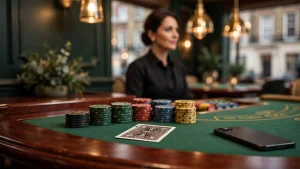
Live Baccarat Online in the UK: Rules and Tables
A practical look at live-table mechanics, betting costs, stream quality and the UK licensing context....

Live Blackjack Online Casinos in the UK: How It Works
A live dealer runs the physical game in a studio while players follow the stream...

Live Dream Catcher Casino UK: Format Guide
The guide separates the studio broadcast from software-led play and sets out practical points for...

Live Roulette in the UK with English-Speaking Dealers
A look at the live studio setup, betting interface, wheel formats and the limits of...

Monopoly Live Casino UK: How Online Play Works
The format pairs a real studio and dealer with screen-based wagers, while rules and availability...
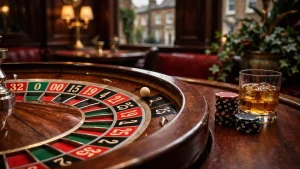
Online American Roulette in the UK: Wheel and Odds
The double-zero pocket distinguishes American roulette and shapes how its live tables, bets and payouts...

European Roulette at UK Online Casinos: Rules and Play
A guide to European roulette’s single-zero wheel, betting options and the differences between online spins...
































































































































































































































































