
Casino VIP Programmes in the UK: How They Work
 Available in GB
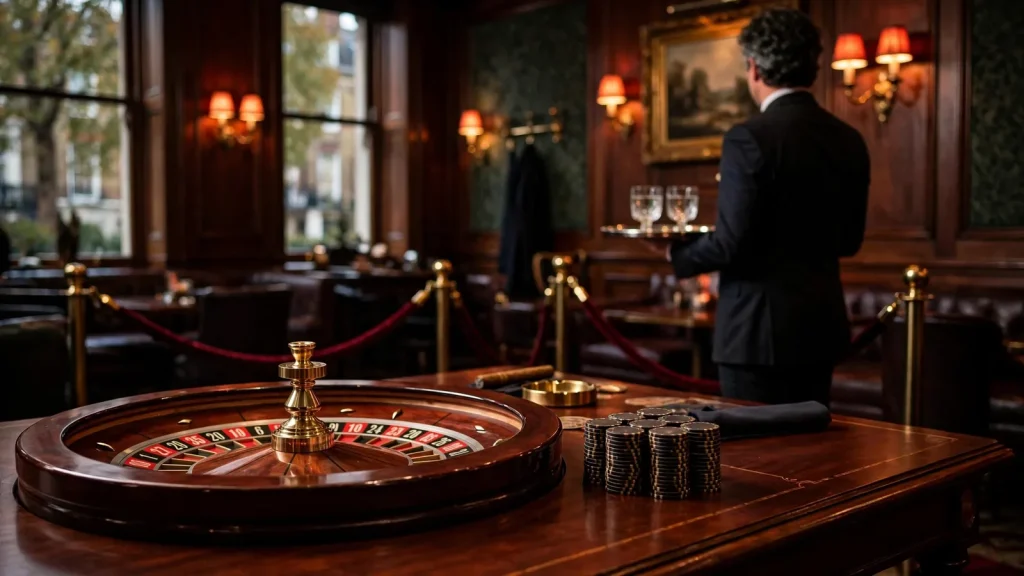
UK VIP status is defined by incentives linked to high-value spending or play frequency, rather than by the label attached to an offer.
Table of Contents
- How UK Online VIP Schemes Are Defined
- The UK Rules Behind Casino VIP Programmes
- What the Numbers Say About VIP Schemes
- When a VIP Offer Becomes a Bonus
- Points, Automatic Enrolment and the Loyalty Club
- VIP Status Has Levels, and Play Can Move Them
- High Rollers, Spending and the Threshold for Attention
- Why VIP Schemes Came Under Scrutiny
- High-Value Offers, Personal Service and Special Treatment
- Rewards, Oversight and the Cost of Calling Someone VIP
- Bonuses
How UK Online VIP Schemes Are Defined
A casino promotion can be generous without being a VIP arrangement. The distinction is not simply the size of an offer, nor the flattering language used to describe it. A high-value-customer (HVC) or VIP scheme is defined by a more particular connection: incentives are tailored or personalised in relation to a customer’s high-value spending or frequency of play.
That connection is the useful dividing line. A promotion made available on the same terms to a broad group of customers is not, on that description alone, a VIP scheme. An incentive becomes part of an HVC arrangement when it is shaped for an individual, or a selected group, because of spending or how often they play. The label matters less than the basis on which the offer is made.
The language of VIP treatment comes from outside gambling. It suggests a separate entrance, a recognised rank, perhaps a person whose presence changes how a service behaves. Online, the setting is less theatrical: an account, a record of activity and an offer that has been adjusted to fit a particular customer. The social idea is old. The machinery is not.
When considering a casino VIP program, payout timing is one practical detail to check alongside the benefits on offer. The entries below note the available payout-speed information for each operator.
1. NightLuck
Payout speed: 1-3 business days NightLuck lists a payout speed of 1–3 business days. That is the available practical detail for readers weighing its VIP offering.
2. x3bet
Payout speed: 1-3 business days x3bet lists payouts at 1–3 business days. No further VIP-program details are available here.
3. Chanze
Payout speed: 1-3 business days Chanze lists a payout speed of 1–3 business days, a useful detail to consider when reviewing its VIP program.
4. Amunbet
Payout speed: 1-3 business days Amunbet lists payouts at 1–3 business days. The available information does not describe its VIP benefits.
5. BeOnBet
Payout speed: 1-3 business days BeOnBet lists a payout speed of 1–3 business days. This is the only supplied detail relevant to assessing its offer.
6. SlotoSport
Payout speed: 1-3 business days SlotoSport lists payouts at 1–3 business days. No specific VIP features are provided.
7. SpinFormula
Payout speed: 1-3 business days SpinFormula lists a payout speed of 1–3 business days. Readers will need further information to assess its VIP program.
8. Zombillion
Payout speed: 1-3 business days Zombillion lists payouts at 1–3 business days. The available facts do not indicate what its VIP program includes.
9. Britsino
Payout speed: 1-3 business days Britsino lists a payout speed of 1–3 business days. That is the only confirmed detail supplied for this entry.
10. NightWin
Payout speed: 1-3 business days NightWin lists payouts at 1–3 business days. No additional information about its VIP offering is available here.
The definition joins two ideas that are sometimes treated as alternatives. An operator may connect incentives to high-value spending, to frequency of play, or to both. A customer need not fit one imagined portrait of a wealthy gambler for the arrangement to count. Frequency is part of the definition too. The scheme is therefore not confined to people who make conspicuously large deposits; repeated play can also be the basis for personalised treatment.
This makes “VIP” a description of a relationship, not merely a title. A badge or label on an account may signal status, but the more important question is what the status is tied to. If the offer is tailored because of how much a customer spends or how frequently they play, it falls within the HVC idea. If the word appears as decoration without that connection, the word alone does not establish the substance of a scheme.
No Wagering Casino Bonus UK: Terms Explained
The distinction can be easy to miss because casinos use the same broad vocabulary for quite different things. “Exclusive”, “personal” and “special” can describe the tone of an advertisement as readily as the structure of a customer arrangement. Those words do not, by themselves, explain why a person receives an offer. The defining feature is the link between the incentive and the customer’s value or activity.
Nor does “tailored” have to mean that every detail is invented from scratch for one person. The definition allows for incentives that are personalised, or otherwise adjusted in relation to spending or frequency. What matters is that the treatment is connected to those characteristics, rather than simply being an offer available to everyone on identical terms. The distinction is one of purpose and basis, not a test of how elaborate the offer looks.
That is why a VIP casino is not best understood as a building, a game category or a separate kind of gambling. It is an online casino offering a particular form of customer treatment. The term can describe an arrangement within a casino rather than a distinct product in its own right. A player may encounter an ordinary casino account, while the operator’s incentives for that customer are handled as part of an HVC scheme.
Cluster Pays Slots in the UK: Rules and Bonuses · Newest Online Casinos and No-Deposit Bonus Terms
The phrase “online VIP casinos” can consequently suggest more certainty than it contains. It sounds as if there were a fixed class of casinos that all operate the same kind of club. The definition establishes no such uniformity. It identifies the feature that makes an arrangement VIP or HVC: incentives tailored or personalised in connection with high-value spending or frequency of play. The name does not tell how an individual operator designs the arrangement, or what any particular customer will receive.
There is also a human distinction beneath the administrative one. Most commercial relationships involve some attention to what a customer does. A VIP scheme makes that attention more explicit: activity is not merely recorded but becomes a reason for differentiated incentives. In that respect, the arrangement turns a pattern of play into a category of customer. The terminology can make the category sound like an honour. Its definition is more prosaic.
The word “value” can invite a narrow reading, as though only the money spent mattered. Yet the definition includes frequency as a separate basis. That matters because repeated activity may carry commercial significance even where spending alone does not explain why a person receives personalised treatment. The category is built around the operator’s attention to activity, not simply around a customer’s self-description or a public status symbol.
So the basic meaning is precise, even if the marketing vocabulary is not. An online casino HVC scheme is an arrangement in which incentives are tailored or personalised in connection with high-value spending, frequent play, or both. That is enough to identify its scope without assuming that every promotion is VIP treatment, or that every person called VIP has entered the same kind of programme.
A label is not the arrangement.
Cascading Slot Games in the UK: Free Play and Offers · Online Casino with a 100% Bonus: How It Works
The UK Rules Behind Casino VIP Programmes
In Great Britain, an online casino is not outside public oversight simply because its servers or other key equipment sit elsewhere. The Gambling Commission regulates remote gambling offered to consumers in Great Britain, wherever that equipment is located. It is also the sole regulator for commercial gambling in Great Britain. The location of the machinery does not decide which rules apply; the market being served does.
That distinction gives high-value customer (HVC) programmes their legal setting. They are not a separate kind of gambling with a private rulebook. They sit inside the wider system governing commercial gambling, including online casinos. A programme may give particular customers tailored treatment, but it does not give an operator a separate licence or exempt it from the obligations attached to its gambling activity.
The national picture needs a little care. The Gambling Commission’s role described here concerns Great Britain. The Gambling Act 2005 governs England, Wales and Scotland, but not Northern Ireland; “UK” is often used casually as though it named one uniform gambling jurisdiction. It does not. For remote operators serving consumers in Great Britain, the relevant regulatory boundary follows the customer market, not the operator’s address.
This matters because an HVC arrangement is still part of the operator’s relationship with a customer. Its label cannot make it private business beyond regulatory reach. Where an operator offers incentives or rewards to customers it designates as high value, VIP or an equivalent term, the programme must be operated consistently with the licensing objectives. The Gambling Commission’s guidance sets minimum expectations that operators are expected to adopt and evidence in their policies, procedures and practices. If those expectations cannot be met, the operator should not run the scheme.
There is a difference between a regulator recognising a commercial practice and endorsing it. The Commission does not turn a VIP title into a badge of approval. Instead, its framework makes the operator responsible for how such a programme is designed and managed. The discretion involved in singling out customers remains subject to public standards.
Regulatory Boundary
For remote operators serving consumers in Great Britain, the relevant regulatory boundary follows the customer market, not the operator’s physical address.
A code of conduct for VIP incentives came into force in October 2020. Its arrival marked the point at which the industry’s treatment of high-value customers was given a more explicit structure within the regulatory framework. That did not create a new category of licence. It placed the practice under clearer expectations.
The phrase “VIP casino” can suggest a sealed room, with its own customs and privileges. In law, there is no sealed room. The ordinary regulatory framework still applies, even when the service is presented as exceptional.
What the Numbers Say About VIP Schemes
The scale of high-value customer (HVC) programmes is easier to misread than a single percentage suggests. Operator participation and the share of gambling yield attributed to VIP customers measure different things: one describes how many operators report having a programme; the other describes the yield associated with those customers. Neither, on its own, says how many people take part across the whole market.
A report by igamingbusiness.com found that 60% of responding operators had VIP programmes in 2024. The comparable figures it reported were 55% in 2021 and 67% in 2020. That sequence does not trace a steady rise or fall. Participation was lower in 2021 than in 2020, then higher in 2024; the figures are snapshots of the operators who responded, not a census of every casino serving the UK.
The distinction matters. A programme can exist without accounting for a large share of an operator’s business, while a small group of participating customers can still generate a notable amount of yield. Counting operators therefore cannot stand in for counting customers or measuring financial weight. The headline percentage is a sign of how widely the model appeared among respondents, not a league table of the casinos that used it.
Casino Sign-Up Offers With No Wagering: UK Guide
The yield figures in the same reporting offer another, narrower view. According to igamingbusiness.com, eight operators recorded combined VIP gross gambling yield of £22.19 million in 2022–23. For 2023–24, the reported total for eight operators was £10.88 million, a fall of 51%. This is a substantial change in the reported total, but it belongs to those eight operators and those reporting periods. It does not establish the yield of every UK operator, nor does it show what happened at any one casino.
That qualification is not a footnote to be hurried past. The figures describe a selected group, and the group’s reported total should not be silently turned into a market-wide estimate. A lower aggregate can tell something about the reported activity of that set of operators. Without more detail, it cannot explain the cause of the change, or separate changes in customer numbers from changes in spending or other factors.
A separate figure reported by igamingbusiness.com puts VIP-generated yield at approximately 3% of overall gross gambling yield across 12 operators. This denominator differs from the eight-operator group in the year-to-year total. The two measures should therefore be read alongside one another, not fused into a single account of the market. The 3% figure describes the proportion reported by those 12 operators; it is not a universal share for every company, and it does not mean every programme has the same commercial weight.
Operator Participation
60% of responding operators had VIP programmes in 2024, compared to 55% in 2021 and 67% in 2020.
Combined Yield
Eight operators recorded a combined VIP gross gambling yield of £22.19 million in 2022–23, falling to £10.88 million in 2023–24.
Yield Proportion
VIP-generated yield was reported at approximately 3% of overall gross gambling yield across a group of 12 operators.
There is an understated contrast in these numbers. A majority of responding operators reported having a programme, while the reported share of overall yield across another group of operators was a small fraction. Presence and scale are not synonyms. The first says that the arrangement was common among respondents; the second suggests that, in the measured group, VIP activity represented only part of total yield. Neither figure identifies the experience of individual customers.
Taken together, the reports sketch a market in which HVC programmes remained present among responding operators, but their reported financial contribution varied by measure and reporting group. The available totals are useful precisely when kept within those boundaries. They support comparison between the periods and groups specified, not a ranking of casinos or a prediction about the value of any individual account.
Numbers have edges.
When a VIP Offer Becomes a Bonus
A high-value customer offer can take the familiar shape of a casino promotion: bonus funds, free spins or entry to a tournament. A specialist casino review describes these as possible rewards for VIP players and says the offer may reflect the games a player favours. That is a useful distinction. The promotion is not simply a badge attached to an account; its form can be tailored to the player’s habits.
Casino Bonuses in the UK: Offers and Free Spins
A slots player, for instance, may find free spins more relevant than an invitation to compete in a tournament. A player drawn to other casino games may be offered something different. The point is not that every HVC receives a particular package, but that promotional rewards can be selected around the games played most. The offer becomes personal in its subject, even when its underlying form is recognisable.
That makes a VIP casino bonus different from a general sign-up promotion. A sign-up offer is presented to attract new customers; a VIP offer is associated with someone already treated as high value. The distinction lies in the relationship behind the promotion, not necessarily in the word “bonus” or the shape of the reward. The same label can cover very different circumstances.
There is a quiet change in emphasis here. A public promotion speaks to a crowd, while an HVC offer is directed at an individual. The attraction may still be extra play, but the selection of the offer can suggest that the operator has noticed what the customer enjoys. Personalisation is a commercial technique as well as a courtesy. It can make a promotion feel less like an advert and more like recognition.
Free spins, bonuses and tournament entry also do different things. A bonus adds promotional value to an account; free spins connect the offer to slot play; tournament entry turns the reward into access to a competition. None of these forms, by itself, explains the value or conditions of an offer. Those details belong to the specific promotion, rather than to the word “VIP”. A generous-sounding label is not a description of how an offer works.
Do
- Read a VIP offer based on its actual content
- Understand the specific conditions of a promotion
Don’t
- Assume a label alone establishes who qualifies
- Infer a reward’s value from the ceremony of its name
The same care applies to birthday bonuses, reload promotions and offers described as exclusive to VIPs. Such phrases may appear in casino marketing, but the label alone does not establish what is included or who qualifies. An HVC offer is better understood by its actual content than by the ceremony surrounding its name. There is no magic in the initials.
Payment preference does not change that basic distinction. Calling a site a bitcoin VIP casino, for example, says something about a payment method and a marketing identity; it does not explain whether a player will receive bonus funds, free spins or tournament entry. Those are separate features. A promotional offer should be read as an offer, not inferred from the currency or status language used to sell it.
The more tailored a reward becomes, the more it can blur the line between entertainment and encouragement to keep playing. That is why a bonus should not be treated as proof that an account is more valuable, or as a dependable part of a player’s routine. It is a promotional instrument, selected and presented by an operator. The manner of presentation may feel personal; the commercial purpose remains visible beneath it.
In an HVC programme, then, the bonus is one possible expression of preferential treatment, not the whole programme. Its form may follow a player’s preferred games, but its meaning depends on what is actually offered. The label is the wrapping. The promotion is the substance.
Online Casino Reload Bonuses in the UK
Points, Automatic Enrolment and the Loyalty Club
A casino loyalty programme can be organised in several ways. One model grants membership in a rewards club automatically; another records points earned through play; a third returns a fixed share of losses as cashback. These arrangements all turn continued participation into a benefit, but they do so through different accounting: membership, accumulated points or a rate applied to losses.
The distinction matters because the word “loyalty” can make unlike systems sound interchangeable. An automatic club may offer benefits without requiring a player to collect points first. A points-based arrangement makes the balance visible and gives it a role in the programme. Cashback, by contrast, is tied to losses rather than to a points total. The label alone does not explain which structure is in use.
Enrolment can be just as quiet. Most online casinos are reported to add players to loyalty programmes when they register or make their first deposit, while some require an explicit opt-in. In the automatic model, membership may begin before it feels like a decision at all. The account has crossed into a club simply because the registration or deposit process has done its work.
That makes the programme’s terms important in a practical, unshowy way. A player needs to know whether membership is automatic or requires a separate step, and what activity actually earns a benefit. A points balance has little meaning without knowing how it is accumulated; a cashback offer depends on the stated rate and how the operator applies it. Those details belong to the programme itself, not to the inviting name attached to it.
Loyalty Programme Models
- Automatic: Membership may begin upon registration or first deposit.
- Points-based: Players earn and accumulate points through play to exchange for rewards.
- Cashback: A fixed share of losses is returned to the player.
Points are a kind of private currency, though not necessarily one with a single exchange rate across casinos. A specialist review of casino loyalty offers describes possible redemptions including cash, bonuses, free spins and other rewards, with the options varying by operator. That variety is the point: a number displayed beside an account is not a promise of any particular reward until the programme explains what it can be exchanged for.
Nor does a points balance automatically tell its owner what it is worth. The practical value rests on the redemption rules: which rewards are available and how the balance can be used. Two programmes may both advertise points while giving them different roles. One may present them as a route to a choice of rewards; another may make membership itself the central feature. The familiar vocabulary conceals a small economy, designed and priced by the operator.
The club, then, is less a single kind of benefit than a framework for keeping track of participation. Its mechanisms can be automatic, points-based or linked to losses, and the process of joining may happen without a separate opt-in. The modest detail of enrolment can shape how a programme is understood: a reward that arrives by default feels different from one that has been deliberately claimed. A small distinction.
VIP Status Has Levels, and Play Can Move Them
A casino’s VIP status is not necessarily a single, permanent label. Specialist casino reviews describe some programmes as having named levels, such as silver, gold and platinum. The labels make a ladder of recognition: a player may occupy one rung, then move to another as their activity changes. The colours and metals are familiar shorthand, but the scheme behind them belongs to each operator.
Progress can be linked to how much a player wagers or how often they play. In a points-based arrangement, wagering may contribute to points, while frequency may count towards tier progress. The two measures are related, but they are not identical. A player who returns often and one who stakes more heavily may therefore be assessed through different measures, depending on the programme’s design.
Online Casinos with Daily Promotions in the UK
That distinction matters. Points are a way of recording activity; tier status is a category assigned within the programme. A player might accumulate points without an immediate change in status, or progress through levels according to a separate calculation. The exact relationship is not universal. “VIP” describes a broad kind of recognition, not a common scale shared by every casino.
A tier can also be understood as a marker of the operator’s relationship with a customer, rather than a badge with a fixed meaning across the market. Silver at one casino need not correspond to silver elsewhere. Nor does a higher-sounding label, by itself, explain how progress is measured. The useful detail is the mechanism: whether wagering, frequency or a combination of activity affects a player’s position.
This is where the status ladder should be kept separate from the offers attached to it. A level may determine how a programme classifies a customer, but it does not, on its own, specify which promotion or other benefit will follow. Those arrangements can vary. Treating the two as interchangeable makes a tier name sound more informative than it is.
The same distinction applies to searches for VIP slots or other casino games. A player’s preferred games may feature in the wider relationship with a casino, but the tier question is about how status changes, not a catalogue of games or offers. A ladder records progress; it does not tell the whole story of what a particular account receives.
There is a small theatre to the vocabulary. Precious metals suggest a climb with a clear destination, while the underlying measure may be no more than activity counted according to a programme’s own rules. The impression of rank is easy to understand. Its meaning is local. Each casino sets the terms by which play can move a customer between levels, and a title alone cannot show where the thresholds lie.
Online Casino with Bonus Crab: UK Offer Guide
High Rollers, Spending and the Threshold for Attention
The phrase “high roller” makes spending sound like a personality: bold, perhaps extravagant, and conveniently easy to sort into a commercial category. In practice, a high value customer (HVC) designation is tied to observed spending or frequency of play. The sums involved may attract attention, but they do not, by themselves, establish that someone can afford to gamble at that level.
One specialist review gives a reported deposit figure of £10,000 for joining an online casino VIP programme. That is a description from a single review, not a standard entry requirement across UK casinos. Operators set their own approaches, and the figure should not be treated as a reliable threshold for becoming an HVC. A person could not infer eligibility from a deposit alone.
The same specialist review describes programmes using points and says players may make regular deposits in the four- or five-figure range. It also reports that an account manager may approach a player with an offer. These details sketch one route by which a casino identifies someone for attention; they do not establish a universal pattern. A VIP players’ club can be presented as a destination, but in practice the designation is made by the operator, not claimed by the player.
That distinction matters. High spending is a commercial signal, not a complete account of a person’s circumstances. Before a customer is made an HVC, the operator must establish that the spending is affordable and sustainable within their leisure spending, consider any evidence of gambling harm or heightened vulnerability, and hold current information about identity, occupation and source of funds. Checks are not meant to end at the moment of entry: information should be verified and harm indicators monitored over time.
So the threshold for attention has two sides. One is the spending or play pattern that may prompt an operator to consider a customer for HVC status. The other is the assessment that must determine whether offering that status is appropriate. The first is commercially legible; the second requires a wider view of the person behind the account.
Compliance Requirement
Operators must verify that spending is affordable and sustainable, and monitor for gambling harm before designating a customer as HVC.
There is no sound basis for treating a large deposit as a shortcut to VIP treatment, or for assuming that regular high-value play automatically leads to an invitation. The account manager’s approach described in a specialist review is a possibility, not a promise. And a reported threshold is not a target. A casino’s interest in a player does not turn the player’s spending into a measure of success.
Why VIP Schemes Came Under Scrutiny
A reward can look like a sign of loyalty. In a high-value customer (HVC) scheme, however, it can also complicate the task of noticing when someone’s gambling has become harmful. The Gambling Commission’s casework found that incentives and these schemes sometimes got in the way of identifying people experiencing harm. The concern was not simply that a customer might receive an attractive offer; it was that the commercial relationship could make warning signs harder to see.
The Commission also found evidence that some schemes encouraged harmful play. That finding put pressure on an industry practice built around recognising and retaining customers who spend heavily or play frequently. The same activity that made someone valuable to an operator could also call for closer attention to their welfare. Those interests do not always pull in the same direction.
UK Online Casino Welcome Bonuses: What to Check
The response began with an industry working group, chaired by GVC and the Betting and Gaming Council (BGC), which developed a draft code of conduct for incentives aimed at high-value customers. A draft, by its nature, was a proposed answer rather than the final word. The Commission’s new guidance took effect on 31 October 2020, marking a more formal stage in the effort to address the risks.
The change was not merely a matter of terminology. The Commission’s intervention challenged operators to reconsider how many customers they placed in these schemes and how they treated them. Since that challenge, the number of customers signed up to VIP schemes has fallen by 70%, according to the Commission. The sharp reduction suggests that the issue was not confined to a few awkward cases: the scale of participation itself came under scrutiny.
That decline does not, on its own, show whether every decision to remove a customer was made for the same reason, or whether harm was prevented in each case. It does show that the industry’s approach changed after the regulator raised concerns. A scheme once presented as a mark of status had become a question of judgement: when does recognition of valuable custom begin to obscure the person behind it?
A less comfortable distinction.
High-Value Offers, Personal Service and Special Treatment
A high-value customer account can be presented as more than a different set of promotions. A specialist casino review describes a package that may include quicker payouts, higher deposit limits, a personal manager, gifts, weekly rewards and invitations to events. These are reported features, not a standard bundle: the contents of an account depend on the operator.
Account Privileges
Quicker payouts and higher deposit limits to change the practical experience of the account.
Personal Service
Dedicated account managers and priority handling for a more individual relationship.
Exclusive Access
Special gifts, weekly rewards, and invitations to events unavailable to ordinary holders.
The distinction matters. A faster payout changes the practical experience of withdrawing money; a higher deposit limit changes what an account permits; a named contact changes who handles questions. Gifts and event invitations move the relationship further from the ordinary customer-service desk. The language of exclusivity makes these arrangements sound like hospitality. They are also a way of giving selected customers a more individual relationship with a gambling business.
That relationship can be flattering. A personal manager may make contact feel less like a transaction and more like recognition. Yet personal attention is not neutral simply because it arrives politely. In a high-value customer programme, service and commercial interest sit close together: the same account that receives tailored attention is one the operator has identified as valuable.
The attractive surface is easy to describe. An online casino loyalty programme might be associated with priority handling, a dedicated contact or invitations that are unavailable to ordinary account holders. But such labels do not establish what a particular operator provides, or whether every customer in a programme receives the same treatment. “Exclusive” is a description of access, not evidence of quality.
Nor should higher deposit limits be mistaken for a benefit without consequence. They may offer more flexibility, but they also make larger deposits possible. Faster withdrawals may be convenient, while gifts and events can make a commercial relationship feel personal. The gesture and the business purpose can coexist.
This is why the broader package deserves more attention than its polished vocabulary suggests. Special treatment can mean practical service improvements, social recognition, or both. It does not, by itself, say anything about whether the account is suitable for the person receiving it. A personal touch is still part of a commercial arrangement.
The most revealing feature may be the combination: money-handling privileges alongside human contact and invitations. A high-value account is not merely a label attached to a reward. It can shape how a customer is treated, and how closely the operator keeps that customer within reach.
Exclusive No Deposit Casino Bonus UK: Code Terms
Rewards, Oversight and the Cost of Calling Someone VIP
A specialist review describes loyalty rewards as extending beyond bonus funds and free spins: they may include personalised support, faster withdrawals, exclusive promotions, gifts or invitations to events. The form can be lavish; the label is less important than what the operator does to decide who receives it, and why.
For a high value customer (HVC) programme, rewards are not simply a marketing department’s discretion. Before an operator offers incentives or special treatment, it must assess whether a customer’s spending is affordable and sustainable within their leisure expenditure, and consider signs of gambling-related harm or heightened vulnerability. Identity, occupation and source of funds must also be supported by current evidence.
That work does not end at enrolment. Operators are expected to keep checking the information they hold and to monitor each HVC for indications of harm. A gift or invitation may look like hospitality; the decision to offer it still belongs inside a system of customer assessment.
Best Bingo Sites UK With No Wagering: Bonus Rules
There is an organisational cost, too. Operators must keep a full audit trail of information gathered and decisions made, and assign responsibility for the programme to a senior executive or board member. Staff who manage HVC rewards must not be paid according to an individual customer’s losses or spending. Commercial appetite is not a substitute for welfare judgement.
These requirements make personalisation more than a matter of remembering preferences. A tailored promotion, a faster withdrawal or a present can deepen the relationship between operator and customer; oversight is meant to ensure that the relationship does not become a route around safer-gambling duties. The regulator’s minimum expectations must be evidenced in policies, procedures and practice. If an operator cannot meet them, it should not run an HVC incentive programme.
A costly label.
Do UK casinos offer loyalty schemes beyond welcome bonuses?
Yes. Loyalty schemes can include points clubs, cashback and VIP rewards such as bonuses, free spins, faster withdrawals and exclusive promotions.
How do I join an online casino loyalty program?
Most casinos enrol players automatically at registration or after their first deposit. Some require you to opt in.
Can I redeem loyalty points for real money?
Yes, some casinos let you redeem points for cash. Others offer bonuses, free spins or different rewards.
Do I need to spend a lot to benefit from a loyalty program?
Not necessarily: points or tier progress may be based on how much you wager or how often you play. VIP schemes, however, typically involve regular four- or five-figure deposits.
What are casino loyalty programs?
They reward customer activity through points, tier progress or cashback. VIP schemes are a form of tailored treatment linked to high-value spending or frequent play.
What types of rewards can I earn from a loyalty program?
Rewards can include bonus funds, free spins, cashback, exclusive promotions and personalised support. Some schemes also offer faster withdrawals, gifts or event invitations.
Bonuses

120 Free Spins No Deposit in the UK: How They Work
The spin count is only one part of an offer; the stake, eligible slot and...

150 Free Spins No Deposit UK: Offer Terms
The guide explains how no-deposit spins are credited, what their stated count does—and does not—tell...

200 Free Spins with No Deposit: UK Casinos
The advertised spin count describes the quantity, while payment rules and promotion terms determine how...

25 Free Spins No Deposit UK: Offer Terms Explained
The spin count is only a starting point: stake size, wagering rules, eligibility and withdrawal...

250 No-Deposit Free Spins in the UK: How They Work
No-deposit spins depend on account registration and promotion activation, while game limits and bonus conditions...

30, 50, 100 or 150 No-Deposit Free Spins
A spin count is only part of the deal: access conditions, eligible slots and rules...

30 Free Spins No Deposit UK: How Offers Work
Free-spin counts describe slot turns, while stake value, winnings and withdrawal terms depend on the...

40 Free Spins No Deposit UK: Offer Terms
A practical guide to eligibility, spin value, wagering conditions, activation and what must happen before...

50 Free Spins No Deposit UK: How Offers Work
No-deposit spins provide promotional access to a specified slot, not cash for use across the...

500 Free Spins No Deposit in the UK: Terms Explained
A no-deposit spin requires no account funding, but any winnings remain subject to the promotion’s...

60 Free Spins No Deposit UK: How Offers Work
No-deposit spins require no payment to receive, but winnings may be held in a bonus...

80 Free Spins No Deposit UK: How Offers Work
The assigned stake, eligible slot and promotion rules determine what 80 spins may be worth...

Best Bingo Sites UK With No Wagering: Bonus Rules
No wagering removes the bonus rollover, but game eligibility and limits on withdrawable bonus winnings...

Cascading Slot Games in the UK: Free Play and Offers
Free-play versions let players explore without staking cash, while promotional spins are account benefits subject...

Casino Sign-Up Bonus UK: How Offers Work
UK welcome offers can hinge on qualifying actions, new-customer eligibility and wagering terms, while free...

Casino Sign-Up Offers With No Wagering: UK Guide
The terms behind a sign-up bonus determine which bets count, what amount is wagered and...

High-Roller Casinos with Bonuses in the UK
A practical look at licensing, bonus wagering, VIP conditions and game restrictions for high-stakes casino...

Low-Wagering Casino Bonuses in the UK: What Counts
The wagering multiplier is only part of the calculation; the covered amount, eligible games and...

Online Casino Payment Methods in the UK: Bonus Terms
See how mobile layouts and payment-specific offer restrictions can change what a deposit means in...

UK Online Casino Welcome Bonuses: What to Check
A closer look at no-deposit rewards, wagering, eligible play and the conditions that can stand...

Online Casino Cashback Bonuses in the UK: Terms
Cashback rules determine which activity qualifies, how rewards are credited and whether bonus funds must...

Birthday Bonus Casinos in the UK: How Offers Work
Birthday promotions are account-specific, and the reward form and conditions depend on the operator’s terms....

Bonus buy casino UK: how the feature works
A practical guide to entry mechanics, demo play and what a bonus-buy feature does—and does...

Cluster Pays Slots in the UK: Rules and Bonuses
The phrase does not set symbol formations or rewards; individual game rules and offer conditions...

Exclusive No Deposit Casino Bonus UK: Code Terms
Eligibility, game-specific rules and limits determine how an exclusive offer works and whether its bonus...

Free Daily Spins at UK Casinos: How Offers Work
Daily spin offers can depend on claim steps, assigned slots, account eligibility and the terms...

Latest No-Deposit Casino Bonuses in the UK
A clear look at how no-deposit promotions work, from when spins arrive to the terms...

Newest Online Casinos and No-Deposit Bonus Terms
The guide separates free spins from bonus winnings and explains how verification, wagering rules and...
No Wagering Casino Bonus UK: Terms Explained
A guide to playthrough calculations and bonus conditions, and why removing rollover does not remove...

No-Wagering Casinos in the UK: Bonus Terms
No playthrough is required, but withdrawal caps and game restrictions may still shape what bonus...

Online Casino Reload Bonuses in the UK
A reload offer applies to an existing account, with its match and conditions set by...
Online Casino Deposits of £1, £5, £10 and £15
A deposit may be accepted as cash without meeting a promotion’s minimum, so the offer...

Online Casino with a 100% Bonus: How It Works
A deposit match is only one part of an offer; eligibility, game contribution and withdrawal...

Online casino with 200% bonus: how it works
A 200% match adds twice the qualifying deposit in bonus credit, but caps and terms...

Online Casino with a 300% Bonus: Terms Explained
A 300% match adds a bonus equal to three times a qualifying deposit, but caps...

Online casino with 400% bonus: terms explained
A match rate is only a starting calculation; deposit limits, eligibility and wagering conditions determine...

Online Casino with a 500% Bonus: How It Works
A 500% bonus describes a promotional rate, and a package advertised as one offer may...

Online Casino with a 600% Bonus: What It Means
Bonus funds and free spins work differently, while eligibility, expiry and withdrawal terms determine how...

Online Casino with Bonus Crab: UK Offer Guide
The phrase alone cannot identify an operator or its terms; the article explains how to...

Online Casinos with Daily Promotions in the UK
Daily promotions can take different forms, and their availability, rewards and conditions may vary from...

Highbet UK Welcome Bonus: Terms and Value
A practical look at how bonus type, qualifying play and withdrawal rules affect the usable...
































































































































































































































































