
MGA-Licensed Online Casinos in the UK: What It Means
 Available in GB
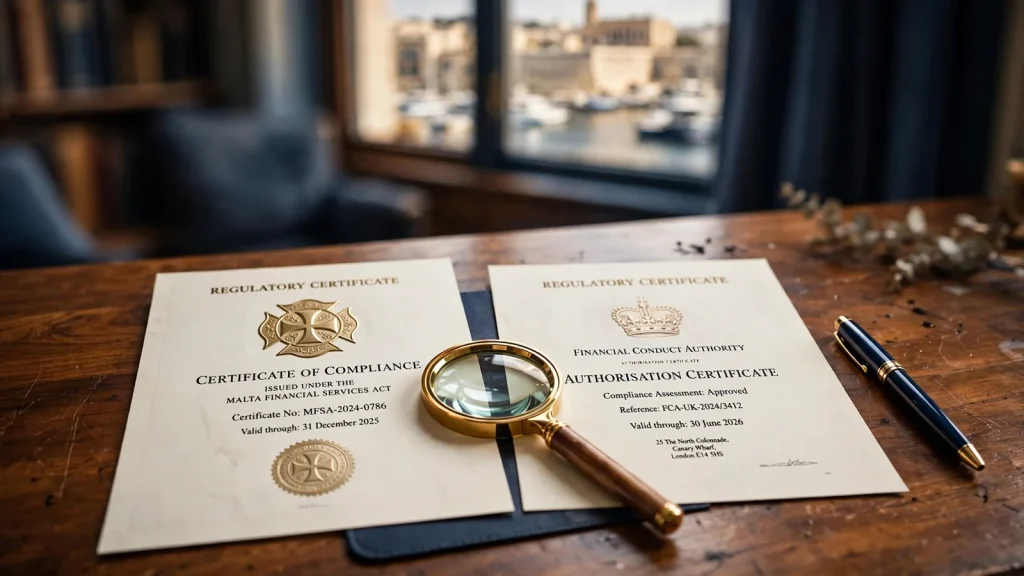
A Malta licence identifies one regulator; it does not replace the UK Gambling Commission licence required to provide remote gambling in Great Britain.
Table of Contents
- What an MGA Licence Means for a Casino Serving Britain
- How to Judge a Malta Casino Without a “Best” List
- Malta Casino Sites and the Limits of the UK Rulebook
- Malta Casinos Not on GamStop: What That Actually Means
- Real-Money Play and the Protections British Customers Should Expect
- Casinos Accepting UK Players: Location Does Not Change the Test
- Bonuses, Wagering and the Cost Hidden in the Small Print
- The Malta Gaming Authority and the Reach of Its Authority
- New Malta Casinos and the Checks Behind Their Claims
- Malta-Based Casinos: Where the Operator Sits—and What That Does Not Prove
- Safety
What an MGA Licence Means for a Casino Serving Britain
A Malta Gaming Authority licence can tell something about the regulator under which an operator is authorised. It cannot, by itself, answer the separate question that matters when a casino provides remote gambling to customers in Great Britain: whether the operator holds a UK Gambling Commission licence. The two licences belong to different regulatory systems. One does not stand in for the other.
That distinction is easy to lose in the language of the industry. A site may describe itself as a Malta-licensed online casino, display the MGA’s name or refer to a casino licence in Malta. These statements concern the operator’s relationship with the Maltese authority. They do not establish that it is authorised to provide remote gambling in Great Britain. For that, the relevant test is a UKGC licence, and an operator’s physical address does not change the requirement.
The point is not a technical footnote about corporate paperwork. A licence is permission within a particular legal system, not a portable seal that travels wherever a website can be opened. The Maltese regulator’s authority and the British regulator’s authority are not interchangeable simply because both concern online gambling. A Malta licence may be meaningful in its own jurisdiction; it does not remove the UK licensing obligation attached to serving customers in Great Britain.
When looking for a Malta-licensed casino for the UK market in 2026, check the licensing and access requirements that apply to your circumstances. This list provides a brief reference point on payout speed.
1. NightLuck
Payout speed: 1-3 business days NightLuck lists a payout speed of 1–3 business days.
2. x3bet
Payout speed: 1-3 business days x3bet lists a payout speed of 1–3 business days.
3. Chanze
Payout speed: 1-3 business days Chanze lists a payout speed of 1–3 business days.
4. Amunbet
Payout speed: 1-3 business days Amunbet lists a payout speed of 1–3 business days.
5. BeOnBet
Payout speed: 1-3 business days BeOnBet lists a payout speed of 1–3 business days.
6. SlotoSport
Payout speed: 1-3 business days SlotoSport lists a payout speed of 1–3 business days.
7. SpinFormula
Payout speed: 1-3 business days SpinFormula lists a payout speed of 1–3 business days.
8. Zombillion
Payout speed: 1-3 business days Zombillion lists a payout speed of 1–3 business days.
9. Britsino
Payout speed: 1-3 business days Britsino lists a payout speed of 1–3 business days.
10. NightWin
Payout speed: 1-3 business days NightWin lists a payout speed of 1–3 business days.
What the MGA requirement does establish
One specific MGA requirement concerns the handling of player funds. MGA licensees must keep those funds in segregated accounts at an approved financial institution. In practical terms, the rule requires a separation between player money and the operator’s ordinary business funds. This is a safeguard about where customer funds are held.
That matters, but its meaning should remain precise. Segregation is not the same thing as authorisation to serve every market. It does not turn an MGA licence into a UKGC licence, nor does it demonstrate that the operator has met the requirements imposed on businesses providing remote gambling in Great Britain. A rule about the placement of funds answers a different question from a rule about permission to operate in a particular market.
The distinction resembles the difference between a well-kept set of accounts and permission to trade in a regulated field. The first may be relevant to how a business handles money; it does not settle whether the business may offer its service to a particular population. Regulatory systems often gather several kinds of assurance under the broad word “licence”. That word can make separate obligations sound like a single, universal approval. They are not.
A casino might therefore have a genuine Malta licence and still lack the UKGC licence required for remote gambling offered to consumers in Great Britain. Conversely, the existence of a UKGC licence is not established merely by the presence of a Malta address, a Maltese corporate entity or a statement about segregated funds. Each claim has its own subject. The licence identifies an authorisation; the account requirement concerns the treatment of funds.
The British test is not a matter of geography
An operator may be based abroad, with its management or infrastructure located outside Britain. That does not alter the licensing test. Where it provides remote gambling facilities to consumers in Great Britain, it must hold a UKGC licence regardless of its physical location. The service’s reach, rather than the operator’s postal address, is what makes the British requirement relevant.
Non-UK-Registered Casinos: Regulation Explained
This is why a Malta connection can be both genuine and insufficient. “Genuine” matters: an operator may in fact hold an MGA licence and be subject to its conditions. “Insufficient” matters just as much: that fact alone does not establish UK authorisation. A description such as “Malta-licensed casino” may be accurate while leaving the central British question unanswered.
The distinction also prevents a common confusion between financial safeguards and market access. A segregated account is not a permission slip. It says something about the handling of player funds under the MGA framework; it does not decide whether a casino may provide remote gambling to consumers in Great Britain. That decision belongs to the UK licensing framework.
For a casino serving Britain, the useful question is therefore not simply whether it has a Malta licence. It is whether it also meets the licensing requirement attached to the British market. The MGA’s fund-segregation rule remains a specific and relevant protection, but it occupies its own place in the picture. A separate account cannot do the work of a separate regulator.
An MGA licence is not a substitute for a UKGC licence; it does not authorise an operator to provide remote gambling services in Great Britain.
The label may be real. The implication may not be.
How to Judge a Malta Casino Without a “Best” List
A “best” label is a conclusion, not evidence. A Malta connection may describe an operator’s location, its corporate structure or a licence it says it holds; those are different claims. A useful assessment starts by separating them and asking what the named regulator actually authorises. The point is not to assemble an MGA casino list, but to understand what a particular licence can—and cannot—tell a player.
Begin with the operator’s identity and the licence it names. The company operating the site should be identifiable, and the licence claim should refer to that operator rather than to a supplier, a parent company or another business with a similar name. A badge or a line in the footer is only a claim. Its value depends on whether the named regulator’s own information supports it. If the site’s wording and the regulator’s record do not appear to describe the same company or activity, the gap matters.
Then look at the scope of the claim. “Licensed in Malta” is not a universal quality mark. It says something about oversight by the Malta Gaming Authority, not about every rule that may apply wherever a site is offered. Nor does it tell a British customer that the operator has UKGC authorisation. The UK Gambling Commission does not approve licences issued abroad, maintain reciprocal arrangements with foreign regulators or take complaints about operators licensed outside the UK. There is no shortcut by which one regulator’s approval becomes another’s.
The licence itself is only the beginning of the evidence. The more useful question is what protections attach to the licence actually held, and how those protections work in practice. For an MGA licensee, player funds must be kept in segregated accounts at an approved financial institution. That is a specific safeguard concerning the handling of player money; it should not be inflated into a guarantee against every loss, dispute or business failure. A statement about segregated funds is meaningful only when it is tied to the operator’s real regulatory status, rather than used as general reassurance.
Complaints arrangements offer another test. UKGC licensees are required to work with an approved Alternative Dispute Resolution provider for player complaints. That gives a British customer a defined route associated with the UKGC framework. A casino’s claim that it has “independent support” or a “fair complaints process” is not the same thing: the wording needs to identify what route exists and which authority or body stands behind it. Where an operator is licensed outside the UK, the UKGC will not take up a complaint against it. The distinction is practical, not ceremonial.
A comparison between Malta casinos should therefore be built from evidence, not adjectives. “Trusted”, “secure” and “fully regulated” are promotional descriptions unless they can be connected to a named operator, a current licence and concrete protections. The same caution applies to lists of “best MGA casinos”: a ranking can make unlike things look comparable while concealing the most important difference, namely which regulator oversees the operator and what recourse follows when something goes wrong.
Do
- Verify the operator’s identity
- Check the licence scope
- Identify the complaint route
- Confirm concrete protections
Don’t
- Rely on “best” labels
- Trust promotional adjectives
- Assume a Malta address is UK authorisation
- Use bonuses as a proxy for safety
Bonuses and polished design may be easier to compare than regulatory arrangements, but they answer different questions. A generous-looking offer does not establish who holds the operating licence, and a familiar game lobby does not establish that the casino’s claims are accurate. The order of scrutiny matters: identity, licence, scope, protection, complaint route. Decoration comes later.
There is also a limit to what a licence comparison can prove. A licence is evidence of a regulatory relationship; it is not proof that every customer service interaction will be satisfactory or that every dispute will be resolved in a player’s favour. Equally, a casino’s own description of its safeguards cannot substitute for the terms and oversight attached to the licence it actually holds. Claims should be read narrowly, not generously.
The result is less dramatic than a “best Malta casino” verdict, but more useful. A sound comparison records what is verifiable and leaves the rest as an unanswered claim. It does not treat a Malta address as a UK authorisation, an attractive bonus as a protection, or a regulator’s name as a promise of identical rights across borders. That is a modest standard. It is also the one that survives the small print.
Malta Casino Sites and the Limits of the UK Rulebook
A casino site can look like one continuous service: the same games, branding and account pages appear wherever the website is opened. Regulation does not follow that visual uniformity. In the United Kingdom, the boundary between Great Britain and Northern Ireland matters because they do not share the same gambling-regulatory arrangement.
Casinos That Bypass GamStop: UK Rules Explained
The Gambling Act 2005 gives the UK Gambling Commission responsibility for gambling in England, Scotland and Wales. Northern Ireland sits outside that arrangement and has its own regulatory framework; remote gambling there is not overseen by the UKGC on the same basis. “UK” may be a convenient label on a website, but it does not erase the legal distinction between these territories.
That distinction can be obscured by the ordinary language of online gambling. Search results and casino pages may group Malta casino sites, UK sites and services said to accept British players under broad regional headings. Such labels describe how a business presents itself, not which authority’s rules apply to a particular territory. A Malta connection may refer to an operator’s base, its corporate structure or a regulatory claim. None of those, by itself, identifies the rules governing a customer in England, Scotland, Wales or Northern Ireland.
Nor does a site’s appearance in a local search, or its ability to load, settle the question. Availability is a technical fact: a page can be visible without that visibility deciding its legal status. The screen is not a map of jurisdiction. This matters especially when a service treats Great Britain and Northern Ireland as interchangeable simply because both are commonly gathered under one national label.
The practical point is not that every Malta-branded site is governed by the same arrangement, or that every visitor encounters the same legal position. It is that territorial context comes before the shorthand on a homepage. The UKGC’s remit covers Great Britain under the Gambling Act 2005; Northern Ireland has a separate regime. A Malta reference does not collapse that boundary, while a website’s wording cannot redraw it.
Non-UK Licence Casinos: What the Licence Means
This is why claims about Malta online casino sites need to be read with attention to the territory being discussed. “Available in the UK” can be imprecise if it leaves the reader to assume that one set of rules applies across Great Britain and Northern Ireland. The two arrangements should not be merged merely because a casino markets itself across the islands or uses a single English-language website.
The distinction is easy to overlook because digital services have no visible border crossing. Yet the regulatory map remains territorial, even when the website is not. A familiar logo, an accessible page or a Malta label may explain how the service presents itself; none answers, on its own, which local framework governs gambling in the place where it is offered.
A border without a gate.
Malta Casinos Not on GamStop: What That Actually Means
A Malta connection does not place a casino inside GamStop. The scheme covers gambling operators licensed by the UK Gambling Commission, which requires every UKGC licensee to participate. A site operating under an overseas licence alone is outside that arrangement. Its absence from GamStop is a consequence of its regulatory status, not a special feature of Malta.
Non-GamStop Curaçao casino sites: UK licensing
GamStop is a national self-exclusion scheme for people who want to block their access to all UKGC-licensed gambling sites. An exclusion can last for six months, one year or five years. During the selected period, participating operators must apply the exclusion across their UKGC-licensed services. The point is collective coverage: a person should not have to register separately with each licensed operator.
Non-UKGC licensed casinos do not participate. That includes sites described as MGA casinos if they are not also licensed by the UKGC. The label “MGA” tells nothing by itself about Gamstop coverage; the relevant distinction is whether the operator holds a UKGC licence and is therefore required to take part. A Malta-based site, or a site with a Malta licence, should not be treated as part of the scheme merely because its name or marketing suggests a connection to the island.
This difference matters most when self-exclusion is meant to create distance from gambling. An account excluded through GamStop is not automatically excluded from a non-UKGC site. The scheme does not extend its reach to operators outside its system, and the existence of another regulator does not make that operator a GamStop participant. “Not on GamStop” is a description of the boundary, not evidence that equivalent safeguards are in place.
Non-GamStop Casinos in the UK: What the Label Means
There is also a legal boundary behind the practical one. Operators offering gambling services to UK consumers without a UKGC licence act unlawfully. A Malta or MGA licence does not replace the UKGC authorisation required to serve consumers in Great Britain. A casino’s availability online, or its claim to welcome British customers, does not alter that rule.
The phrase “Malta casinos not on GamStop” can therefore describe two different things in casual use: an overseas site outside the scheme, or a site whose status is being presented as a selling point. Neither interpretation makes non-participation a recommendation. For someone who has chosen self-exclusion, seeking another route to gambling can defeat the purpose of that decision; a foreign licence does not reconnect the site to GamStop.
The boundary is deliberate, but it is not a safety net around every site carrying a Maltese association. GamStop’s reach follows UKGC licensing. Outside it, the shared exclusion mechanism ends.
Legal Risk
Operators offering gambling services to UK consumers without a UKGC licence are acting unlawfully, regardless of whether they hold an MGA licence.
Real-Money Play and the Protections British Customers Should Expect
A real-money casino is not merely a games page with a cashier attached. In England, Scotland and Wales, an operator offering gambling for money must hold a UKGC licence. That requirement gives the transaction a public framework: the operator is accountable to the regulator, rather than relying on the reassuring tone of its own pages. A Malta connection, or the appearance of an MGA licence, is not itself the safeguard that governs real-money play in these nations.
The distinction matters because the first protections are practical and ordinary. Before a customer can deposit or play, the Gambling Commission requires the operator to establish that the person is at least eighteen. Age verification is therefore not a box to tick after a session has begun; it is a condition of access to the money-playing service. The gate comes first.
This may seem a modest rule beside the language of casino design: welcome banners, tables, spinning reels, and a cashier that makes the movement of money look almost weightless. But age checks mark a boundary between entertainment presented as a private choice and an activity regulated as a matter of public responsibility. The friction is deliberate. A site that treats it as optional is not offering the same basic standard.
Customer balances raise a different question: what happens to money held by a business if the business fails? UKGC licensees must keep player funds separate from operational funds. The point is to prevent customer money from simply becoming part of the operator’s working capital, exposed to the same commercial risks as office costs or ordinary business debts. If a casino goes bankrupt, that separation is intended to protect player money.
Merkur Casino Online in the UK: Games and Licensing
It is a safeguard with a specific purpose, not a decorative phrase. “Funds protected” can sound like a blanket promise, but the useful detail is how the balance is treated while it sits with the operator. Segregation distinguishes money held for players from money used to run the company. That distinction is the part worth noticing.
A Malta-themed site may display polished assurances about secure payments or careful account management. Those claims do not replace the UKGC requirements that attach to a UKGC licence. Nor does a foreign regulatory badge, by itself, establish that British real-money customers receive the same protections. The relevant standard is not the atmosphere of the website, but the obligations under which its gambling service is operating.
These safeguards concern different stages of the relationship. Age verification controls entry; separate handling of player funds addresses the money held during play and the possibility of business failure. Together, they make regulation more than a seal in a footer. They set conditions around who may play and how a licensed operator must treat the balance entrusted to it.
That is the baseline, not a flourish.
Casinos Accepting UK Players: Location Does Not Change the Test
A Malta address can sound like an answer to a regulatory question. It is not. The relevant issue is not whether a casino has offices, servers or a corporate registration in Malta, but whether it provides remote gambling to consumers in Great Britain. If it does, it must hold a UKGC licence, wherever its business is based.
That distinction matters when a site describes itself as a Malta casino accepting UK players. An overseas operating licence may explain where the business is authorised, but it does not replace the authorisation required to serve customers in Great Britain. The place printed in a footer cannot redraw the boundary of the British market.
The requirement for a UKGC licence is based on the service’s reach to consumers in Great Britain, not the operator’s physical postal address or corporate registration.
There is an understandable attraction to the Malta label. Malta has become closely associated with online gambling businesses, and a Malta-based operator may present that connection as a sign of legitimacy. But a business’s standing in one jurisdiction and its permission to serve another are separate questions. Treating them as interchangeable turns geography into a credential it cannot be.
What “accepting UK players” needs to mean
A casino’s own wording may describe its intended audience, while its registration process or terms may indicate whether customers from Britain can actually use the service. Neither, by itself, resolves the legal test. The central point is whether the operator is providing remote gambling facilities to consumers in Great Britain. If so, a UKGC licence is required.
This is why lists of MGA casinos for UK players can mislead when they treat availability as proof of authorisation. A site appearing in a search, loading from a British connection or displaying games does not establish that it may lawfully offer gambling to people in Great Britain. Nor does an overseas licence settle that question. Visibility is not permission.
The same distinction applies to free-play pages. A version that allows visitors to explore games without staking money does not answer whether the operator may offer real-money gambling to British customers. The branding, interface and Malta connection may be identical across different versions of a site; the regulatory question depends on what service is being provided and to whom.
A site might also use broad language about being open to international customers. That phrase is not a British operating licence. The requirement follows the service and its market, not the operator’s preferred description of its reach.
The address is not the test
This rule prevents a simple evasion: placing an office or server overseas does not remove an operator from the UKGC’s requirements when it serves consumers in Great Britain. The Gambling Commission’s test is not a contest over which country can claim the building. It concerns the provision of remote gambling to people in its jurisdiction.
So the phrase “Malta online casinos accepting UK players” describes a claim to examine, not a category made lawful by its wording. An operator based in Malta may serve Britain only if it meets the British licensing requirement. Without that UKGC licence, offering gambling services to UK consumers is illegal.
The paperwork follows the market. The postcode does not.
Safe Online Casinos in the UK: How to Check Trust
Bonuses, Wagering and the Cost Hidden in the Small Print
A Malta casino bonus can look like a simple addition to a balance, but bonus credit is not necessarily money that can be withdrawn. Where wagering conditions apply, the player must place qualifying bets before the bonus or any related winnings become cashable. The offer’s headline value is only one part of the calculation; the eligible games and their contribution rates shape how much play is required in practice.
Contribution rates determine how quickly qualifying bets count towards the requirement. Slots may contribute the full value of each bet, while table games may contribute only a fraction or be excluded altogether. A bet placed on a game with a lower contribution therefore moves the counter less than an equal bet on a slot. The distinction can turn an apparently straightforward offer into a longer route to withdrawal. Small print does the arithmetic.
For promotions offered in the UK, wagering requirements must stay within the 10x cap. That limit does not make every bonus equally useful: game exclusions, contribution rules and withdrawal conditions still affect what a player can do with the credit. An offer described as an MGA casino bonus should be read for those mechanics, not judged by its label or the size of its opening figure. The same applies to online casino bonuses associated with Malta, whatever language is used to present them.
No-deposit offers have a separate practical condition: a player must be physically located in Great Britain to claim one. A Malta casino no-deposit bonus is not therefore available merely because an account can be opened or the offer appears on a screen. Location matters at the point of claiming.
Bitcoin-themed casino offers require the same attention to their wording. A reference to Bitcoin does not explain which games count, how much each bet contributes, or when winnings become withdrawable. Those are terms to establish from the offer itself; the currency theme does not answer them. A bonus is a set of conditions before it is a balance.
The Malta Gaming Authority and the Reach of Its Authority
The Malta Gaming Authority and the UK Gambling Commission belong to different regulatory systems. An operating licence issued in Malta is not a UKGC approval, and the UKGC does not certify, endorse or extend the reach of offshore licences. The distinction matters because a regulator’s authority is not transferable simply because another authority exists.
Gibraltar casino licences for UK players: what to know
The UKGC does not maintain reciprocal agreements with offshore regulators. That means a Malta licence does not create a shared complaints route or an arrangement in which the British regulator takes responsibility for a decision made under Malta’s framework. The two authorities should not be read as partners administering one common licence.
Nor does the UKGC handle complaints about operators licensed outside the UK. A complaint concerning an MGA-licensed casino therefore does not become a UKGC case merely because the person making it is in Britain or because the site is accessible there. The regulator responsible for a licence and the place where a customer lives are separate parts of the picture.
This can make online casino labels sound more reassuring than they are. “MGA-licensed” identifies a connection to Malta’s regulatory system; it does not mean that the UKGC has reviewed the operator or stands behind its licensing decision. Likewise, a Malta Gaming Authority casino list, where consulted, cannot establish UKGC authorisation. Lists can tell what they list. They cannot confer another regulator’s status.
Casino Without a UK Licence: What It Means
The limit is institutional, not a judgement about the quality of every decision made in Malta. The point is narrower: a British complaint about an operator outside the UK system is not handled by the UKGC, and the Commission does not use reciprocal agreements to take up the matter with an offshore regulator. That boundary is easy to lose in the polished vocabulary of international gambling, where “regulated” can sound like a single, portable condition.
For British consumers, the name of the authority on a site’s licence should therefore be understood literally. It identifies the regulator associated with that licence, not a guarantee that another regulator will intervene. Different systems, different reach.
New Malta Casinos and the Checks Behind Their Claims
A newly launched Malta casino can arrive with polished pages, confident language and a list of assurances. None of those establishes what protections apply to British customers. A site’s age and presentation are poor substitutes for evidence: claims about its licence and operating standards need to be checked against the regulator responsible for the service it provides.
For consumers in Great Britain, the central question is whether the operator holds a UKGC licence for remote gambling. A Malta connection, or a claim to hold an MGA licence, does not itself establish UK authorisation. Nor does a badge on a website prove that it belongs to the operator named in the licence. The legal distinction is not cosmetic.
The comparison becomes clearer in the practical requirements attached to UKGC licensing. Licensed operators must use games tested and certified by approved testing houses. That gives the regulator a defined standard for the games offered under its system; a new casino’s own statement that its games are fair is not the same evidence. The assertion may sound reassuring. It is still an assertion.
Curaçao Casino Licence UK: What It Means
Complaints provide another useful test. A UKGC licensee must have an approved Alternative Dispute Resolution provider available to handle player complaints. Under the UKGC process, a complaint is first taken through that provider and can then be raised with the Gambling Commission if it remains unresolved. A site’s promise of “customer support” does not describe this independent route, and a general assurance of fair treatment cannot replace it.
These checks matter particularly when a brand has little public history. Familiar-looking symbols, copied regulatory language or an impressive list of payment methods—including Neteller—do not verify who holds the operating licence or which rules govern the service. The payment option says how money may be moved, not which regulator is responsible.
The prudent reading of a new Malta casino’s claims is therefore documentary, not atmospheric: identify the operator, establish the licence that applies to its British-facing service, and distinguish regulator-backed obligations from statements written by the casino itself. A freshly opened site may be legitimate in its own jurisdiction, but that does not answer the British licensing question. Newness is not proof either way. Claims need corroboration.
Malta-Based Casinos: Where the Operator Sits—and What That Does Not Prove
A Malta address can sound like a regulatory credential. It is not one for the British market. The location may describe where a company is based, but it does not establish which rules govern its offer to customers in Great Britain. A business address and permission to serve a market answer different questions.
The distinction matters because online gambling is organised across borders, while regulation is not simply attached to the place where a company keeps its offices. An operator can be based in Malta and still provide remote gambling to people in Great Britain. In that case, its physical location does not remove the British licensing requirement: operators serving consumers in Great Britain must hold a UK Gambling Commission licence.
So “Malta-based” is a description, not a verdict. It does not, by itself, show that an operator is authorised to serve British customers, nor does it establish that the protections available are equivalent to those attached to a UKGC licence. A Maltese corporate address cannot settle either point.
This is why the label can be attractive yet insufficient. Malta is familiar in the international online gambling industry, and its name may lend a site an air of established presence. But familiarity is not authorisation. The company’s location may explain something about its business; it cannot substitute for the relevant operating licence.
The same principle applies whether a site is described as a Malta casino, a Malta-based online casino or simply an online casino with offices there. Payment logos and an overseas address do not change the regulatory test. The decisive issue is not where the operator sits, but whether it is permitted to provide remote gambling to consumers in Great Britain.
A map is not a licence.
Safety

Anjouan casino licence in the UK: what it means
Anjouan authorisation applies under its own system, while UK market access, player protections and practical...

Foreign Casinos for UK Players: UKGC Rules Explained
A practical look at licensing, safeguards, bonus turnover, VPN use and withdrawals at casinos operating...

International Casinos for UK Players: Key Risks
The guide explains how offshore status relates to UK rules, payments, bonus terms, player safeguards...

Offshore casino sites: UK legality, risks and terms
An overseas address does not replace UKGC permission, and an offshore licence does not settle...

Offshore casinos for UK players: rules and risks
The guide explains how UKGC licensing, bonus terms, crypto payments and payout risks shape the...

British Casinos Not on GamStop: Licensing and Risks
GamStop applies to UKGC-licensed operators; sites accessible from Britain may sit outside that system and...

Casino sites not registered with GamStop in the UK
GamStop applies within the UK Gambling Commission’s framework; casinos governed elsewhere may sit outside that...

Casino Without a UK Licence: What It Means
A licence from another jurisdiction does not make a casino UK-regulated, and the difference can...
Casinos That Bypass GamStop: UK Rules Explained
The guide explains how GamStop's UKGC licensing boundary shapes access to gambling services outside participating...

Curaçao Casino Licence UK: What It Means
A practical guide to checking licence claims, understanding UK access and weighing the trade-offs around...

Gibraltar casino licences for UK players: what to know
A Gibraltar licence identifies an overseas regulator, but does not establish UK Gambling Commission oversight...

Merkur Casino Online in the UK: Games and Licensing
Merkur branding identifies games, while the site's operator and licence determine the account relationship and...
Trustworthy Online Casinos in the UK: How to Check
A practical look at licensing, player controls, payment terms and complaint routes in the British...

Non-GamStop Casinos in the UK: What the Label Means
A site’s absence from GamStop does not establish its licence status or make it lawful...

Non-GamStop Curaçao casino sites: UK licensing
A Curaçao licence is separate from UKGC authorisation, and access from Britain does not establish...

Non-GamStop European Casinos: UK Rules Explained
A casino’s European location does not decide whether it falls within GamStop; the operator’s status...

Non-UK Licence Casinos: What the Licence Means
A foreign authorisation places an operator under its issuing jurisdiction, not the UK Gambling Commission,...

Non-UK-Registered Casinos: Regulation Explained
The guide distinguishes a casino’s place of business from the regulator overseeing its gambling services...

Non-UK-Regulated Casinos: Rules for UK Players
A practical guide to licensing boundaries, player protections and what using an offshore casino can...

Non-UKGC Licensed Casinos: Regulation and Risks
A guide to overseas licensing, player protections, payment terms and the checks involved in assessing...

Online slots not on GamStop: what it means
The term refers to an operator’s participation in GamStop, with implications for self-exclusion, licensing and...

Safe Online Casinos in the UK: How to Check Trust
A working link to the regulator’s official register is stronger evidence than a trust badge...

Trusted Casinos Not on GamStop UK: What to Check
A practical framework for checking licensing, terms, payment risks and what casino reviews can—and cannot—prove....

Trusted UK Casino: How to Check a Licence
A practical look at UKGC authorisation, account verification, bonus terms and payment checks for online...

USA Casinos for UK Players: Licensing and Risks
An overseas base or foreign licence does not replace the UK licence required to offer...
































































































































































































































































