
Responsible Gambling
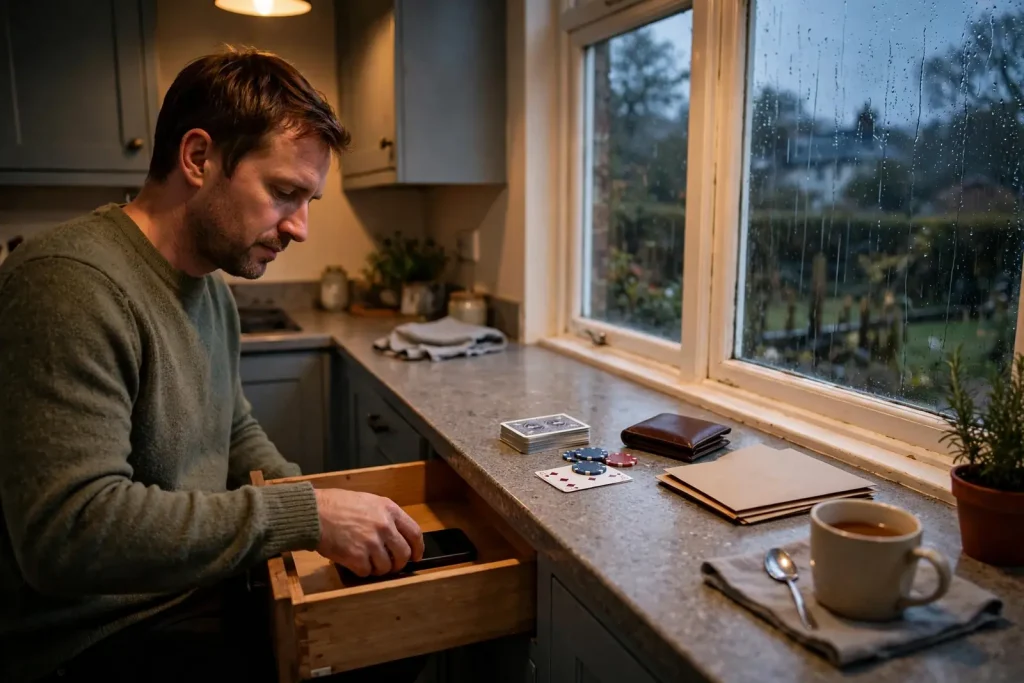
Gambling is entertainment with a cost, not a way to earn money or a solution to money problems. A win cannot be planned as income; losses do not become more likely to return because they have continued for a while. When gambling starts to shape ordinary decisions about spending, time or relationships, that change matters more than any single session.
Signs that gambling may be becoming a problem
Problem gambling is often visible in practical details before it is given a name. Warning signs include:
- spending more than intended, or using money set aside for bills, food or other essentials;
- borrowing, selling possessions or using credit to keep gambling;
- hiding gambling, losses or bank transactions from family and friends;
- repeatedly trying to stop or cut down, then returning to gambling;
- gambling for longer than planned, or missing work, study, sleep or social commitments;
- feeling restless or irritable when unable to gamble;
- returning to gamble in an attempt to win back losses;
- continuing despite arguments, financial strain or other clear consequences.
One sign may be enough to pause and look closely at what is happening. The useful question is not whether a particular loss seems large by someone else’s standards, but whether gambling is taking money, time or attention that had another purpose.
Controls available on UK-licensed sites
Remote operators must prompt new customers to set a financial limit before their first deposit and provide accessible account-level limit controls. Those controls can be used to restrict gambling spend. UKGC-licensed casinos must also provide responsible gambling tools, including self-exclusion. The available controls should be visible in the account’s responsible gambling section.
For an immediate pause, self-exclusion is the direct account-level option. It is not the same as closing a browser tab: it is a formal restriction on access to gambling with that operator. Where continued access is a concern, the account controls can also be used to set limits or begin self-exclusion rather than relying on a decision made during a session.
Some protections are built into the market’s rules. Operators must verify a customer’s age before allowing deposits into a gambling account. Online slot autoplay is banned in Britain, and each online slot spin must last at least 2.5 seconds before another game cycle can begin. For an online slots game, the total stake in a game cycle cannot exceed £2 for a person under 25 or £5 for a person aged 25 or older. These restrictions slow or limit particular forms of play; they do not make gambling a source of income.
Remote gambling operators cannot accept credit-card payments for gambling, including credit-card funds routed through a money service business. They also cannot accept wallet payments where the wallet allows credit-card funds to be used for gambling. UK-licensed casinos cannot accept credit cards for gambling.
Where to turn
The most immediate route is the operator’s responsible gambling section: use the account limit controls or activate self-exclusion. If a control is difficult to find or does not work, contact the operator through its customer support channel and ask for the account to be restricted. A UKGC licensee must provide an internal complaints process and access to an approved Alternative Dispute Resolution (ADR) service. The operator’s site should set out how to make a complaint and how to access that service.
No independently verified external gambling-help organisation or contact details are available for this page. No helpline number or external address is supplied here; an unverified contact would be worse than no contact. If gambling is causing immediate danger or severe distress, local urgent health services are the appropriate route.
Gambling rules are partly a record of how the state tries to contain risk without removing the activity: limits, age checks and exclusion tools sit beside a licensed market. The safeguards have edges. They cannot make a loss affordable or turn a gamble into a financial plan.
































































































































































































































































