
Live Roulette in the UK with English-Speaking Dealers
 Available in GB

A look at the live studio setup, betting interface, wheel formats and the limits of practice play.
Table of Contents
- How Live Roulette Moves from Studio to Screen
- Roulette Casinos and the UK Licence
- Roulette Casino Sites: What the Live Table Requires
- What Makes a Live Roulette Table Suit the Occasion
- Roulette Wheels, Zeroes and the Cost of a Bet
- Playing for Real Money at a Live Table
- Free Roulette Play and the Limits of a Practice Session
- Bonuses at Live Roulette Tables: Read the Terms First
- Roulette Odds, House Edge and the Search for a Win
- Lightning Roulette and What the Facts Can Support
- Jackpoty live casino
How Live Roulette Moves from Studio to Screen
A live dealer roulette table joins two kinds of action: a person working a physical wheel in a studio, and players making their selections through an on-screen interface. The image arrives in real time, so the wheel is not an animation standing in for a game. It is the visible centre of an event taking place elsewhere, translated into a form that can be watched and joined through a screen.
That arrangement gives the game its particular character. A dealer sets the wheel in motion and spins the ball; the result comes from the physical wheel, rather than from a computer generating a number. Meanwhile, the interface provides the means to place bets. The dealer and the screen perform different jobs. One presents the game’s physical action; the other carries the players’ choices.
It is an old social pattern in a new setting. A table has always divided roles: someone manages the game, while others decide how to take part. In live dealer roulette, that division stretches across distance. The studio remains a working place, with a human dealer and a real wheel. The player’s side is digital, with the screen acting as a route into the table rather than a replacement for it.
When choosing a live roulette table, dealer language matters, but so does knowing what is confirmed about an operator. These verdicts stick to the available information rather than assuming details about its roulette tables or dealers.
1. NightLuck
Payout speed: 1-3 business days NightLuck has a stated payout speed of 1–3 business days. No details are provided about English-speaking live roulette dealers.
2. x3bet
Payout speed: 1-3 business days x3bet has a stated payout speed of 1–3 business days. No details are provided about English-speaking live roulette dealers.
3. Chanze
Payout speed: 1-3 business days Chanze has a stated payout speed of 1–3 business days. No details are provided about English-speaking live roulette dealers.
4. Amunbet
Payout speed: 1-3 business days Amunbet has a stated payout speed of 1–3 business days. No details are provided about English-speaking live roulette dealers.
5. BeOnBet
Payout speed: 1-3 business days BeOnBet has a stated payout speed of 1–3 business days. No details are provided about English-speaking live roulette dealers.
6. SlotoSport
Payout speed: 1-3 business days SlotoSport has a stated payout speed of 1–3 business days. No details are provided about English-speaking live roulette dealers.
7. SpinFormula
Payout speed: 1-3 business days SpinFormula has a stated payout speed of 1–3 business days. No details are provided about English-speaking live roulette dealers.
8. Zombillion
Payout speed: 1-3 business days Zombillion has a stated payout speed of 1–3 business days. No details are provided about English-speaking live roulette dealers.
9. Britsino
Payout speed: 1-3 business days Britsino has a stated payout speed of 1–3 business days. No details are provided about English-speaking live roulette dealers.
10. NightWin
Payout speed: 1-3 business days NightWin has a stated payout speed of 1–3 business days. No details are provided about English-speaking live roulette dealers.
This distinction matters because the word “online” can describe very different things. In one version, the game is represented entirely by software. In another, software carries a view of a human-run game to people who are not physically in the studio. Both can be played through a digital interface, but the source of the outcome is different. In live roulette, the wheel and ball provide the event; in computerized roulette, a Random Number Generator produces the result.
The interface is therefore more than a decorative frame around a video. It is where a player’s participation is expressed. The dealer does not receive a physical chip across a felt table from someone sitting at home; the selection is made on screen. The stream and the betting controls sit together, but they are not the same thing. One lets the player observe the dealer’s handling of the wheel. The other records the choice being made.
That combination can make an online casino roulette table feel closer to a shared public ritual than to a solitary piece of software. The player is remote, yet the visible action is performed by another person in a studio. There is a human presence on one side and a personal interface on the other. No physical table is shared, but the game still has a person at its centre. The screen does not abolish the dealer; it changes the distance between dealer and audience.
Monopoly Live Casino UK: How Online Play Works
Computerized roulette removes that particular human performance from the production of the result. Its Random Number Generator is the mechanism that determines the outcome, rather than a ball travelling around a visible wheel. The distinction is not that one format is online and the other is not: either may be reached through a digital screen. It is whether the result is shown as the conclusion of a physical spin or generated by software.
The two formats can consequently offer different kinds of assurance to the eye. In a live dealer game, the viewer sees a dealer spin a real wheel and can follow the event as it unfolds. In computerized roulette, there is no physical spin to watch; the result comes from the Random Number Generator. Visibility and mechanism are not interchangeable, but each format has a clear account of where its result comes from.
For roulette online in the UK, that difference is a useful starting point before considering any particular table. “Live” describes the presence of a real-time studio game and a human dealer, not simply a polished visual style. The screen links the player to the stream and provides the controls for betting. A computerized version may resemble the same familiar game on screen, while relying on a different process to determine its result.
In live roulette, the outcome is determined by a physical wheel and ball in a studio, whereas computerized roulette relies on a Random Number Generator (RNG).
There is a modest social oddity in this arrangement. A game associated with a wheel, a table and people gathered around it can now be encountered through a device, yet its live form still depends on a person performing the central action. The technology carries the scene; it does not turn the dealer into an illustration. On the other hand, a digital roulette game can dispense with the studio altogether and use a Random Number Generator. Similar appearance, different source.
The distinction is simple, though easy to blur when both formats sit behind the same kind of interface. A live dealer spins a physical wheel while players place bets on screen. Computerized roulette uses a Random Number Generator to produce its result. One is a streamed human-run event; the other is a software-generated outcome. That is the line between them.
Roulette Casinos and the UK Licence
A live roulette table may look like a small room set apart from ordinary internet life: a wheel, a dealer, a stream arriving on a screen. Legally, however, the decisive feature is not the room or the camera. It is whether the operator offering the game to British customers holds the required licence from the UK Gambling Commission.
That condition applies to live-dealer casinos, not only to roulette. A casino serving the British market cannot make its legal status depend on where its studio, servers or corporate address happen to be. Remote gambling operators selling into Great Britain must hold the relevant Commission licence, wherever they are based. The wheel may be elsewhere; the regulatory obligation is not.
Live Dream Catcher Casino UK: Format Guide
This is one of the less theatrical facts about online gambling, and one of the more useful. A polished broadcast, a recognisable dealer or a familiar casino vocabulary cannot establish that a roulette service is authorised in the UK. Nor does the word “UK” in a site’s name settle the question. The licence is the material distinction between a legal UK roulette casino and an operator outside the British regulatory system.
The law gives that distinction its shape. The Gambling Act 2005 governs gambling in England, Wales and Scotland, and defines a casino by the arrangement through which people are given an opportunity to take part in casino games. For remote operators offering real-money gambling to customers in those nations, a UK Gambling Commission licence is required. A live roulette game is not exempt because the action takes place in a studio rather than on a digital wheel.
Northern Ireland has a different legal position: the Gambling Act 2005 does not govern it. That territorial detail matters in a discussion labelled “UK”, because the phrase can conceal distinct legal arrangements within one country. The licensing condition described here concerns operators serving the British market and should not be stretched into a claim that one statute covers every part of the United Kingdom.
For a casino to be legal for UK players, the operator must hold a current operating licence from the Commission. The relevant question is therefore not whether roulette appears on a page, but whether the business offering that game is authorised to provide remote gambling in the market. A live stream is a delivery method, not a substitute for permission.
Legal Compliance
Remote gambling operators offering services to customers in Great Britain must hold a valid licence from the UK Gambling Commission regardless of where their studios or servers are located.
There is a civic logic to this arrangement. Gambling is permitted, but its commercial offer is placed under public supervision rather than treated as a private bargain between a distant company and an individual player. The licence identifies the operator as belonging to the regulated system. It does not turn roulette into a harmless pastime, or promise that every session will be fair in the ordinary sense of the word. It establishes the legal framework in which the service may be offered.
That framework also prevents a common confusion: an operator’s physical location and its legal authority are separate matters. A business based abroad may serve British customers only if it meets the local licensing requirement. Conversely, the appearance of a British-facing site does not itself prove compliance. Geography is no loophole.
The licence is a threshold, not a recommendation to play. It says that the operator is authorised within the UK system; it does not rank casinos, certify a particular table as suitable, or remove the ordinary financial risk of gambling. Those are different questions, and they should not be folded into the meaning of regulation.
So the legal test for live roulette is plain, even if the industry around it is not: a casino offering live-dealer games to the British market needs the appropriate UK Gambling Commission licence. The camera can cross borders. The rule does not.
This material is for entertainment purposes only and is not gambling advice.
Live Blackjack Online Casinos in the UK: How It Works
Roulette Casino Sites: What the Live Table Requires
A live dealer roulette session asks more of its setting than a digital version does. The game proceeds at a slower pace, and the stream depends on a stable internet connection. Those are not decorative differences. They shape how long a round takes, how reliably the action can be followed and how much room there is for interruption.
The slower rhythm comes from a game unfolding in real time rather than being resolved by a computerised process. A wheel must be spun, the ball must settle, and the round must move on before the next one begins. There is no reason to expect the brisk sequence of a digital game. For some players, the pause gives the session a more social, watchable quality; for others, waiting is simply part of the price of seeing a physical wheel in motion. The pace is built into the format.
That makes the connection more than a background convenience. If the stream falters, the picture can become difficult to follow at the very moment when the wheel is turning or the result is being settled. A stable connection helps keep the visual sequence continuous. It cannot make a live game faster, and it does not alter the rules; it allows the session to be seen as it happens.
The site experience also has to accommodate two things at once: the live video and the betting interface. The camera view carries the event, while the interface is where bets are entered. A player moving between them is still following one round, not two separate games. This is why the screen’s responsiveness and the connection supporting it matter in practice. A delayed or interrupted view can make an already measured pace feel less orderly.
Do
- Ensure a stable internet connection to avoid stream interruptions
- Check the minimum stake before starting a session
- Decide on a budget in advance and keep it intact
Don’t
- Expect the fast pace of a digital game at a live table
- Mistake a slow round for a reason to increase your budget
- Assume the interface can compensate for a weak connection
Minimum bets are another practical distinction. Live tables can ask for more than digital roulette, which changes how easily a session fits a chosen budget. A specialist review has reported a starting stake of 20p for many live roulette and baccarat tables, while describing blackjack’s opening limits as higher. That is a report from one kind of source, not a fixed tariff for every table or a promise about what any particular site offers. Limits can differ, so a headline figure should not stand in for the terms displayed at the table.
This matters because a live session may contain fewer rounds in a given stretch of time, but a higher entry stake can still make each round more consequential to a player’s balance. The slower pace should not be mistaken for lower financial exposure. Nor does a low minimum, where one is available, make the game predictable; it only describes the stake required to join that table.
The phrase “roulette casino sites” can suggest that the important distinction lies in a catalogue of venues. For live play, the immediate demands are more ordinary: a connection that holds, a pace that suits the session and a minimum stake that does not press against a pre-set budget. The interface can be polished, but it cannot remove the wheel’s pauses or make a weak connection steady. Hardware and habit meet here.
Deal or No Deal Casino UK: Slot Format Explained
Before a session begins, the relevant details are therefore practical rather than grand: whether the live stream remains clear, whether the pace is comfortable, and whether the minimum stake fits the amount set aside. A budget should be decided in advance and kept intact; interruptions or a slow round are not reasons to enlarge it. The live format brings a human tempo to the screen. It also brings ordinary limits.
What Makes a Live Roulette Table Suit the Occasion
A live roulette table is not made suitable by its name or presentation. The useful distinctions are quieter: the rules attached to the game, the paytable shown at the table, and the minimum stake required to join. Together, they determine whether a particular table fits the way someone intends to play. A polished studio cannot answer those questions on its own.
The rules deserve attention before the first bet. Tables may present different versions of roulette or apply different conditions, so the game title is not a substitute for reading the information displayed alongside it. The paytable matters for the same reason: it shows what a winning selection pays under that table’s rules. Familiarity with roulette in general does not remove the need to check the specific game. Small differences belong to the table, not to the player’s memory.
This is less glamorous than choosing a table by its studio or dealer. It is also more useful. A clear rules panel and paytable let the game be assessed on its own terms, rather than through atmosphere, branding or the assumption that every roulette table is interchangeable. The details are the point.
Choosing a Table
- Read the specific rules attached to the game
- Check the paytable for winning payouts
- Note the minimum stake required to join
- Confirm the table fits your predetermined budget
Minimum stake is the other practical test. A table can be attractive in every other respect and still be a poor fit if its entry point is higher than the amount set aside for play. The minimum is not a suggestion about what a player ought to wager; it is the smallest permitted bet at that table. Comparing it with a predetermined budget keeps the decision grounded, rather than allowing a table’s pace or presentation to set the spending level.
One specialist review reports that many live roulette and baccarat tables start at around 20p. That is a reported figure from a review, not a dependable rule for every table or a promise about what will be available. Minimums can differ between games and tables, so the amount displayed at the chosen table is the relevant one. A broad claim about what “live roulette costs” would blur the very variation that matters.
A sensible comparison therefore begins with the actual table details, not a search for a universal winner. Check that the game’s stated rules are understood, read its paytable, and note the minimum stake before deciding whether to join. If any of those details are difficult to locate, that is a reason to pause rather than to fill the gap with assumptions. The table should make its conditions legible.
Crazy Time Live Casino Game Show in the UK
The occasion matters, too, though not in the sense that a particular table can guarantee a better result. Someone looking for a measured session may prefer a minimum that leaves room to place bets within a set budget; someone interested in a particular rule set can give that priority instead. These are choices about fit, not evidence that one roulette casino is best for everyone. The word “best” tends to conceal the more important question: best for which rules, stake and purpose?
That is an unromantic way to choose. It leaves the dealer’s manner and the studio’s décor in their proper place: part of the viewing experience, not a replacement for the terms of play. When the rules, paytable and minimum stake are clear, the table can be judged without ranking whole casinos or mistaking presentation for suitability.
Read the table first. Then decide.
Roulette Wheels, Zeroes and the Cost of a Bet
A roulette spin ends when the ball settles in one of the wheel’s numbered pockets. A player wins when the number selected matches the one where the ball lands. The table turns that simple event into a collection of choices: a single number can be selected, or a broader group of numbers can be covered. The distinction is not merely a matter of taste. Each choice carries a different house edge.
The green pockets are the detail that changes the arithmetic. European Roulette has one, marked 0. American Roulette has two: 0 and 00. The green spaces sit apart from the numbered red and black pockets, and they give the house its advantage over bets that otherwise divide the numbered outcomes into apparent opposites. The colours may suggest balance; the extra pocket quietly unsettles it.
European Roulette
Features a single green pocket marked 0, offering a house edge of 2.7% on most bets.
American Roulette
Contains two green pockets (0 and 00), resulting in lower odds of winning (1 in 38) compared to the European version.
The odds of winning in American Roulette are one in 38, compared with one in 37 in European Roulette. That difference follows from the additional 00: there is another possible landing place that does not belong to the ordinary numbered selections. The American layout is therefore less favourable to a player making the same kind of choice. A roulette casino game may look familiar across both versions, but the wheel’s inventory matters more than the table’s appearance.
The cost of a bet can also be expressed through the house edge. A straight-up bet, which selects one number, has a house edge of 2.9%. Other bets have a house edge of 2.7%. These figures describe the mathematical advantage held by the casino over time, rather than predicting what will happen on a particular spin. A single result can go either way; the edge is a feature of the structure repeated across play.
That difference is easy to overlook because the straight-up choice seems the most direct: one number, one possible match. Yet directness is not the same as mathematical value. The house edge assigned to that bet is higher than the edge for other roulette bets. The broader choices may feel less dramatic, but their cost, measured this way, is lower.
The zero pockets explain why roulette is not an even contest between red and black, or between one side of a layout and another. Such choices may appear symmetrical, but the green space interrupts the symmetry. In American Roulette, the second green pocket widens that interruption. The wheel’s design is a small piece of institutional history made visible: the house does not need to alter every bet; it needs only to keep a place outside the apparent divide.
For a UK roulette casino game, the essential comparison is therefore not simply whether the table is called European or American. It is how many green pockets the wheel contains, what kind of bet is being made, and what house edge attaches to it. A stated chance of winning is not a promise about an individual result, and a lower edge does not remove uncertainty. It only describes a less costly mathematical arrangement.
Roulette’s visual language encourages quick judgments: red or black, odd or even, one number against the field. The wheel’s less visible language is arithmetic. The difference between one zero and two is enough to shift the odds, while the type of bet shifts the house edge again. The apparent simplicity is doing its usual work.
This explanation is for entertainment purposes only, not gambling advice.
Playing for Real Money at a Live Table
At a live table, the dealer is not an animation standing in for a machine. A camera carries a real-time studio stream to the screen, while bets are entered separately through the casino’s interface. The picture shows the procedure; the controls register the stake. Keeping those two channels distinct matters: watching the dealer does not itself place a bet, and a click in the betting area is what commits one.
Attention: Watching the live dealer stream does not constitute placing a bet; a wager is only committed when a selection is made via the betting interface.
That arrangement gives the session a different rhythm from digital roulette. The dealer’s actions and the table’s pace set the interval between decisions, rather than a rapid sequence of computer-generated rounds. There is time to follow what is happening, but less room to treat each spin as an almost instantaneous repeat. A live table asks for attention as well as a stake.
The connection is part of the experience, not a minor technical footnote. A stable internet link helps keep the stream and betting interface in step. If the picture freezes or the connection falters, the session can become harder to follow precisely when decisions are being made. The studio may be polished; the home connection remains stubbornly ordinary.
The stake deserves equal care. Live games tend to move more slowly than their digital counterparts and can set higher minimum bets, so the starting point shown at a particular table should be checked before play begins. A specialist review has cited live roulette and baccarat tables starting at around 20p, while blackjack tables may have higher starting limits; that is a reported example, not a dependable market-wide price. Minimums are table conditions, not a measure of what a session ought to cost.
For real-money play, a budget set in advance gives the session a boundary. The interface can make betting feel orderly, but it does not change the fact that money is at stake. A pause in the stream, a run of results, or the social presence of a dealer is no reason to raise that boundary or chase a loss. Live casino entertainment is not gambling advice.
The format combines a human performance with a digital transaction: the dealer handles the table, while the software handles the player’s wager. That division is the defining convenience—and the point at which attention is needed. A smooth broadcast can make the setting feel familiar; it cannot make the stake less real.
Free Roulette Play and the Limits of a Practice Session
Free roulette can sound like a simple version of the real-money game, but the word “free” describes the stakes, not necessarily the experience. A session without a cash wager is distinct from placing money on a live table. It should not be treated as a way to earn cash: free play does not provide real payouts or winnings.
That distinction matters because roulette’s familiar appearance can make two different activities seem interchangeable. The wheel, the betting interface and the language of the table may resemble a paid game, while the financial consequence does not. A practice session, where offered, is not evidence that a player has tested the conditions of a real-money table. Nor does it establish how a particular free game is set up.
The phrase “free roulette” also says nothing by itself about where a game is available, whether it uses a live dealer or a computer-generated result, or which rules apply. Those details need to be established separately rather than inferred from a label. The same caution applies to named variants: a title alone does not explain its mechanics or make it suitable for practice.
Free roulette sessions are for practice and familiarisation with the interface; they do not provide real payouts or winnings.
In Britain, online gambling for money is permitted at sites holding the appropriate UK Gambling Commission licence, and operators must verify age before allowing deposits. A non-cash session is not a substitute for those protections where real money is involved. The legal and financial character of a game depends on what is being played and whether money is staked, not on the reassuring sound of “practice”.
Free play can therefore have a limited role: it may familiarise someone with the appearance of a roulette interface, if the particular offering provides that opportunity. It cannot demonstrate what a real-money session will feel like, and it should not be mistaken for proof of a route to winnings. The label is not a promise.
For anyone moving from a no-stakes session to gambling for money, the practical boundary is clear: decide on a budget before play and keep within it. A free session does not remove the risk attached to later wagering, and no practice routine changes the outcome of a future spin. This is entertainment, not gambling advice.
Bonuses at Live Roulette Tables: Read the Terms First
A roulette casino bonus can look relevant because it appears beside a live table, yet the offer and the game may have little to do with each other. Bonus terms determine which games count towards wagering requirements and how much each contributes. A live table may be eligible but still add only a small share of the required wagering; one cited weighting is 10%. The headline value alone says little about how useful the offer will be for live play.
A specialist review describes most UK welcome offers as free spins on slots, which cannot be used at live tables. That distinction matters: a welcome bonus may be generous in its own terms while offering no direct way to play roulette with the bonus itself. Where a cash bonus is involved, the live game may count only partially towards the wagering requirement, so progress can be slower than the promotional wording suggests.
The same caution applies to a no-deposit offer. The label does not establish that the bonus is available, that roulette is eligible, or that any live-table wagering will count in full. Those details depend on the terms attached to the specific offer. A “roulette casino no deposit bonus” is not a standard feature simply because the phrase appears in promotional material.
Before opting in, the relevant clauses are the eligible games, the contribution assigned to live roulette, the wagering requirement and any maximum-bet condition. These can change the practical value of a casino roulette bonus more than its advertised amount. A bonus that cannot be used at a live table, or that counts only marginally towards release conditions, may be of little help to someone interested chiefly in live dealer roulette.
Promotions are designed to bring activity to a casino, not necessarily to make every game equally suitable for meeting conditions. The small print is where that distinction becomes visible. A bonus is not extra roulette money unless its terms actually allow it.
Caution: Always check the bonus terms for eligible games and wagering contributions, as some welcome bonuses (such as free spins) cannot be used at live roulette tables.
This is entertainment, not gambling advice. Any decision to take an offer should follow a fixed budget, with no attempt to recover losses by extending play.
Roulette Odds, House Edge and the Search for a Win
The wish to find a reliable way to win at roulette runs into a mathematical boundary: the house edge is built into the payouts. It describes the casino’s expected advantage across repeated play, not a prediction of what will happen on a particular spin. A single result can go either way; the edge becomes meaningful over time.
The type of wager makes a small difference. A straight-up bet, placed on one number, carries a 2.9% house edge. Other roulette bets have a 2.7% edge. The lower figure does not turn those bets into a route to profit. It only describes a slightly smaller mathematical disadvantage under the stated rules.
French Roulette offers a distinct treatment of zero on even-money bets. If the ball lands on zero, the player loses half the stake rather than the whole amount. That rule reduces the cost of that outcome; it does not make a winning result more likely, nor does it remove the house edge from play.
Systems that change stake size can alter the shape of a session, but they cannot change the underlying odds. A sequence of wins may be followed by losses, and a run of losses can make a staking plan increasingly costly. No pattern of previous results guarantees what the next spin will do. The wheel has no memory, however persuasive a streak may look.
So the best way to approach a casino roulette table is not to treat it as a puzzle with a winning code. Understanding the house edge helps distinguish a bet’s cost from a promise of success; it cannot supply certainty. A sensible limit set before play can keep that distinction practical, rather than merely mathematical. Roulette remains a game of chance, not a dependable way to make money.
European Roulette at UK Online Casinos: Rules and Play
Lightning Roulette and What the Facts Can Support
The name Lightning Roulette can lead to expectations of a distinct set of rules, but the familiar foundations of roulette remain the useful point of reference: a dealer spins a physical wheel, the ball settles on a number, and a winning selection matches that result. The name alone does not establish how any additional feature works. Specific claims about special numbers, multipliers or altered payouts need to be checked against the table’s own rules and paytable.
That distinction matters when a live casino presents a branded roulette table beside standard versions. The label may suggest a particular experience, but the details that determine a bet are the ones displayed for that table: what selections are available, how winnings are calculated and what conditions apply. A title is not a substitute for rules.
Nor does the phrase “Lightning Roulette slots” make roulette a slot game. Roulette centres on a wheel and numbered pockets; computerized roulette, by contrast, uses a Random Number Generator rather than a dealer spinning a physical wheel. The terminology can blur in casino menus, but the underlying formats are different.
A record of earlier spins can describe what has already happened. It cannot make a future number more likely, and a tracker should not be treated as a route to predicting the next result. The same caution applies to claims built around past Lightning Numbers: historical display is not a forecast.
For a UK table, the useful questions are ordinary ones, not mystical ones. What does the paytable say? Which rules govern the bet? Is the session a live dealer game or a computer-generated version? Those details carry more weight than a dramatic name. Roulette remains roulette; branding does not repeal chance.
Is the house edge the same at live dealer casinos online?
No. In roulette, the stated house edge is 2.9% on straight-up bets and 2.7% on other bets; in French Roulette, an even-money bet loses only half when the ball lands on zero.
How do you play live roulette?
Choose your bets using the on-screen interface, then watch the dealer spin a physical wheel. You win when the ball lands on a number covered by your bet.
How do you choose a live dealer casino?
Check that the operator holds a UK Gambling Commission licence to serve customers in Great Britain. A live table streams a real-time game with a human dealer, and it requires a stable internet connection.
How does the house edge change between games?
In roulette, the wheel format affects the odds: American Roulette has 38 pockets, including 0 and 00, while European Roulette has 37, with one zero. The odds of winning are 1 in 38 on the American wheel and 1 in 37 on the European wheel.
Jackpoty live casino

Live Casinos in the UK: How Online Tables Work
Live casino games broadcast dealers and table play through an online interface, but the format...

Crazy Time Live Casino Game Show in the UK
A look at the studio-and-interface format, UK casino context and the limits of claims about...

Deal or No Deal Casino UK: Slot Format Explained
The guide distinguishes the familiar Banker-and-briefcase premise from slot features, bonus searches and what free...

French Roulette Online Casino UK: Rules and Play
French roulette combines a single zero with La Partage on eligible even-money bets, alongside live...

Live Baccarat Online in the UK: Rules and Tables
A practical look at live-table mechanics, betting costs, stream quality and the UK licensing context....

Live Blackjack Online Casinos in the UK: How It Works
A live dealer runs the physical game in a studio while players follow the stream...

Live Casino Lightning Roulette in the UK
A live stream connects a physical dealer and wheel to digital betting controls, while computerised...

Live Dream Catcher Casino UK: Format Guide
The guide separates the studio broadcast from software-led play and sets out practical points for...

Monopoly Live Casino UK: How Online Play Works
The format pairs a real studio and dealer with screen-based wagers, while rules and availability...
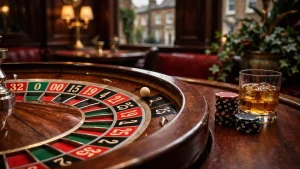
Online American Roulette in the UK: Wheel and Odds
The double-zero pocket distinguishes American roulette and shapes how its live tables, bets and payouts...

European Roulette at UK Online Casinos: Rules and Play
A guide to European roulette’s single-zero wheel, betting options and the differences between online spins...
































































































































































































































































